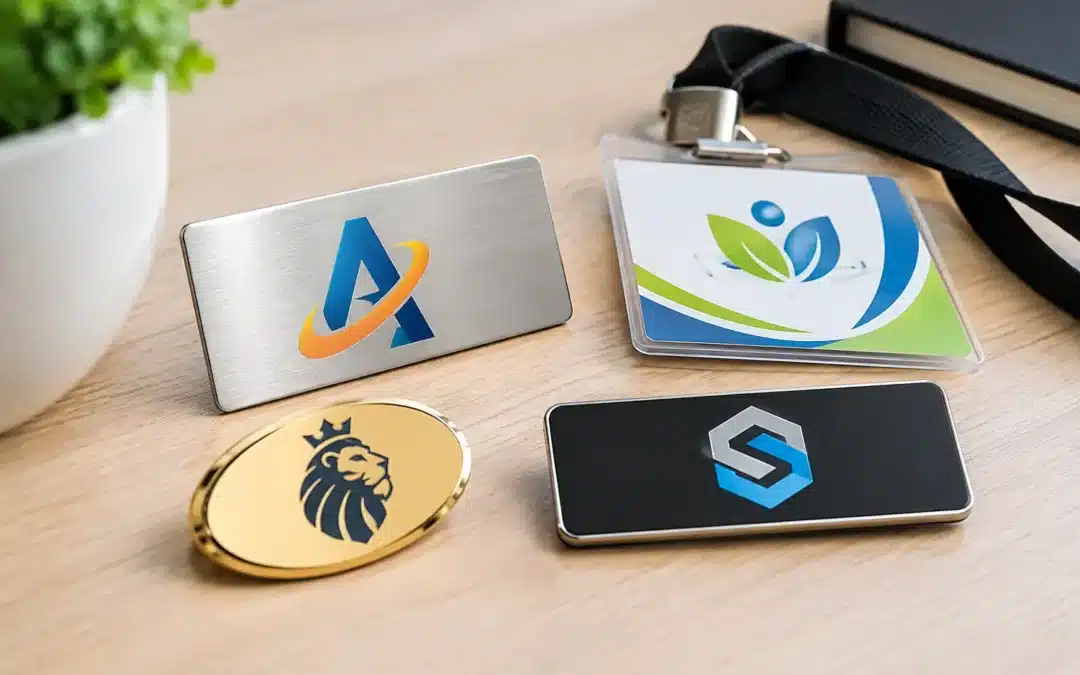
A nameplate has a simple job: identify a person, place, product or piece of equipment clearly. But poor nameplate printing can make an otherwise professional business look disorganised. Faded text, hard-to-read type, peeling labels and mismatched colours all work against the brand image you have built.
For Australian businesses, clubs, schools and event organisers, a well-made nameplate is a practical item with visible value. It helps visitors find the right person, gives staff a more polished presentation and keeps branded equipment or displays easy to recognise. The best result comes from choosing the right material, print method and finish for where the nameplate will be used.
What Is Nameplate Printing Used For?
Nameplates are used across far more settings than reception desks and office doors. They can identify staff members, committee representatives and volunteers at conferences, meetings and community events. They can also be used for machinery, desks, lockers, displays, product identification and recognition awards.
For customer-facing teams, personalised name badges help make conversations easier. A clearly printed name and logo gives customers confidence that they are speaking with the right person, particularly in retail, hospitality, healthcare, property and service businesses. For clubs and associations, nameplates can bring consistency to committee functions, presentations and member events.
The use case should guide the specification. A temporary event badge needs to be affordable and easy to distribute. A nameplate fixed to outdoor equipment needs stronger materials and ink that will stand up to weather, handling and cleaning. Choosing the same option for both jobs may save time at the start, but can create unnecessary replacement costs later.
Choosing Materials for Nameplate Printing
The material affects how a nameplate looks, feels and lasts. There is no single best option for every order. The right choice depends on whether the item is worn, mounted, handled frequently or exposed to the elements.
Plastic nameplates are a popular choice for staff badges, indoor signage and event identification. They are lightweight, versatile and available in a wide range of colours. They can suit printed logos, individual names and role titles, making them useful for organisations that need a professional look without overcomplicating the order.
Metal finishes, including aluminium, create a more premium appearance. They work well for executive offices, commemorative items, recognition plaques and durable equipment labels. Metal can also complement a more established brand identity, although it may cost more than standard plastic and can require longer production planning depending on the finish.
Engraved materials are worth considering when durability is the priority. Rather than relying only on surface print, engraving creates a lasting mark that is less likely to wear away through regular handling. This is particularly useful for industrial settings, outdoor applications, asset labels and areas where cleaning products are used regularly.
For short-term functions, printed card or synthetic badge options can be a sensible solution. They are easy to personalise for large attendee lists and keep per-unit costs manageable. The trade-off is lifespan: they are designed for a day, weekend or limited campaign, not years of use.
Artwork That Works at Nameplate Size
A logo that looks excellent on a banner does not automatically reproduce well on a small nameplate. Fine lines, tiny text and detailed graphics can lose definition when reduced. Before production, consider what people must be able to read at a normal viewing distance.
Usually, the person’s name should be the most prominent element. A role title, organisation name or department can sit beneath it in smaller type, while the logo should remain clear without crowding the layout. High contrast between text and background improves readability, especially under indoor lighting or at busy events.
Supplying quality artwork is one of the best ways to protect brand consistency. Vector logo files are generally preferred because they can be resized cleanly, while clear high-resolution files may work for simpler designs. If a logo includes specific Pantone colours, provide those references where possible. Colour matching can vary between materials and print methods, so discussing the intended finish before approval avoids surprises.
It is also worth checking names, titles and spelling carefully. Personalised products are difficult to correct once printed, and the smallest typo can undermine an otherwise excellent event or staff presentation. A final proof process is not paperwork for its own sake – it is the point where artwork, names, quantities and layout should be confirmed together.
Finishes and Fixings Matter
The back of a nameplate deserves as much thought as the front. The fixing needs to suit how the plate will be worn or displayed, without damaging clothing, furniture or equipment.
Magnetic fittings are popular for uniforms because they avoid pinholes in shirts, jackets and blouses. They are comfortable and present neatly, though they may not suit every workplace or wearer. Pin fittings are straightforward, economical and reliable for temporary badges, while clip fittings can be useful for conferences and visitor identification.
For mounted nameplates, adhesive backing offers a clean finish on suitable smooth surfaces. Screws or mechanical fixings may be better for long-term signs, high-traffic locations or heavier materials. If the nameplate is likely to be moved, replaced or updated, consider a holder or interchangeable insert system rather than permanently fixing every individual plate.
Surface finishes also influence the final appearance. Gloss can make colours appear bright and crisp, while a matte finish reduces glare and can be easier to read under strong lighting. A protective coating may be worthwhile for nameplates that receive frequent handling. It adds cost, but it can extend the useful life of the item and keep the branding looking sharper for longer.
Planning an Order Without the Last-Minute Rush
Nameplate orders often become urgent because names change, event registrations arrive late or a new team starts close to an opening date. Some of that is unavoidable, but early planning gives you more options on material, finishing and budget.
Start with the quantity you need now, then allow for likely additions. Ordering a few spare blank or standard nameplates can be practical for staff changes, late registrations and replacement needs. For a large conference, separate the list into attendees, speakers, organisers, exhibitors and VIPs if each group requires a different design or colour.
Lead time should account for artwork approval, personalisation, production and delivery, not simply the day the order is placed. More specialised finishes, large quantities and individually named items generally require more coordination. If your deadline is fixed, such as an annual presentation night or trade show, communicate it early so the production schedule can be planned around it.
Budget should be assessed across the whole job rather than only the unit price. A cheaper badge that breaks, fades or looks inconsistent may need replacing sooner. On the other hand, a premium engraved metal nameplate may be unnecessary for a one-day volunteer event. Good value means selecting an option that matches the purpose, expected lifespan and presentation standard.
A Consistent Part of Your Brand Presentation
Nameplates may be small, but they sit close to the people and places your customers notice most. When the logo, colours, typography and finish align with your other printed materials, they reinforce a consistent identity without needing a large advertising budget.
This is where working with a supplier that understands both branded merchandise and production detail can make the process easier. ABC2000 can help organisations coordinate nameplates with badges, lanyards, business cards, event signage and other promotional products, so the finished pieces feel like part of the same brand rather than separate purchases.
Whether you are preparing for a corporate event, fitting out a new office, recognising club members or identifying equipment, start with the practical question: what does this nameplate need to do every day? The answer will point you towards the material, print style and finish that present your organisation properly and keep working long after the first impression.