A badge can carry a sharp logo, a clear name or a message worth remembering, but the fitting determines whether people will actually wear it. Choosing the right badge attachment options helps protect clothing, keeps branding visible and makes badges practical for the setting – whether that is a one-day conference, a school fundraiser or everyday staff uniforms.
The best choice is rarely just about price. A fastening that works well on a polo shirt may damage a silk blouse; one that is ideal for a lapel pin may be inconvenient for a busy event volunteer changing outfits. Start with how and where the badge will be worn, then match the attachment to the garment, audience and expected lifespan.
Badge attachment options at a glance
For most custom badges, the main attachment choices are a pin back, magnet, clip, brooch fitting, safety pin or a specialist fitting such as a butterfly clutch. Each has a different balance of security, comfort, garment protection and cost.
A traditional pin remains a popular all-round choice for promotional badges and event name badges. It is economical, sits close to the garment and works across many fabrics. Magnetic fittings offer a more premium alternative when avoiding pin holes matters. Clips are practical for name badges, particularly where staff need to remove and reattach them during shifts. Lapel pin fittings are typically selected for small metal badges designed to look permanent and refined.
There is no single attachment that suits every job. A good supplier will ask a few practical questions before recommending the most suitable finish.
Pin backs: the familiar, cost-effective choice
A pin back is the standard fastening many people picture when they think of a badge. The badge has a pin or safety-pin-style fitting on the reverse, allowing it to be secured to a shirt, jacket, bag or lanyard.
For large events, community campaigns, election material, fundraising badges and short-term promotions, pin backs are often the sensible option. They are affordable at scale, easy for recipients to understand and suitable for most cotton, denim and heavier uniform fabrics. They also work well for round button badges and printed promotional badges where the goal is broad distribution.
The trade-off is simple: pins leave a small hole. This is usually not a concern on a polo, hoodie or tote bag, but it can be unwelcome on fine knitwear, delicate fabrics or formal business clothing. Pins also need to be handled with care, especially for children’s activities and public hand-outs.
Safety pin fittings for larger badges
Larger badges need more support to stop them turning, pulling forward or sagging on the fabric. A safety pin fitting provides a wider anchor point and is often used for bigger promotional badges, name badges and commemorative designs.
If your badge is wide, heavy or likely to be worn for an entire day, this fitting is generally more stable than a small pin. It is a reliable option for volunteers, club members and event teams wearing standard uniforms.
Magnetic backs: polished presentation without holes
Magnetic badge backs use strong paired magnets: one fixed to the badge and another placed behind the garment. They are popular with corporate reception teams, sales staff, real estate professionals, hospitality staff and anyone wearing business attire that should remain unmarked.
The obvious advantage is garment care. There is no pin hole through a blouse, suit jacket, dress shirt or lightweight knit. Magnets are also quick to fit, which is useful when staff change name badges between shifts or departments. For organisations that want a more polished, reusable name badge solution, magnetic attachments make a strong impression.
There are considerations, however. Magnetic fittings cost more than basic pin backs, and very heavy badges may shift on loose or thick garments. They should not be used by people with pacemakers or other implanted medical devices without appropriate medical guidance. The small loose magnetic component also means they are not suitable for young children.
For most adult workplace applications, these limits are easy to manage. The result is a smart, professional badge that employees are more likely to wear comfortably.
Clips: practical for name badges and uniforms
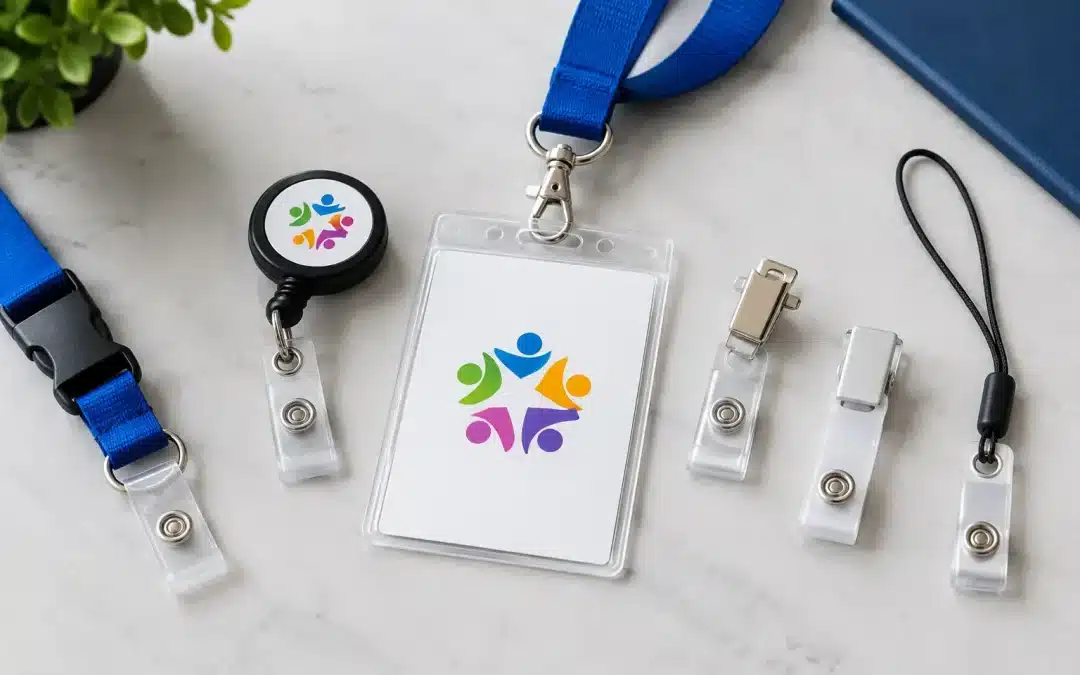
Clip fittings attach over a pocket edge, collar, lanyard or garment seam rather than piercing the material. They are a useful choice for reusable staff name badges, trade show teams and temporary event credentials, particularly when badges must be removed often.
A clip is quick and familiar, and it avoids putting a hole in clothing. It can be especially effective on shirts with chest pockets or on uniforms with a defined edge for the clip to grip. Some badges use a combination clip and pin fitting, giving the wearer flexibility to choose the method that works with their outfit.
The limitation is placement. Not every garment has a pocket, lapel or stable edge in the right position. Clips can also swing or sit at an angle when attached to soft fabrics. If consistent logo placement matters, test the attachment on the actual uniform before approving a large order.
Butterfly clutches and lapel pin fittings
Small enamel badges, metal lapel pins and recognition pins commonly use a post and butterfly clutch. The post passes through the garment and the clutch locks onto the back, holding the badge firmly in place. Rubber clutches and locking pin backs are also available for particular designs or higher-security needs.
This is one of the best badge attachment options for clubs, associations, milestones, membership recognition and premium branded merchandise. It provides a compact, tidy finish and suits small designs that sit neatly on a lapel, cap or bag.
A butterfly clutch is more secure and discreet than a standard safety pin, but it still punctures fabric. It is also a smaller component that can be misplaced if badges are removed frequently. For a commemorative lapel pin intended to be kept and worn repeatedly, that is usually an acceptable trade-off. For a large team name badge worn every day, a magnetic back or clip may be more convenient.
Match the fitting to the job
The easiest way to narrow down your choice is to consider the badge’s purpose before its appearance. A low-cost badge distributed at a public event has different requirements from an executive name badge or a club pin presented at an annual awards night.
Think about these practical questions:
- What garments will people wear: polos, jackets, business shirts, sports uniforms or delicate fabrics?
- Will the badge be worn once, for a season or every working day?
- Does the badge need to stay in an exact position for photographs, customer-facing roles or event security?
- Are there safety considerations for children, schools or public distribution?
- Is the badge a disposable promotional item, a reusable name badge or a keepsake?
For example, a school fundraising badge may suit a standard pin back because affordability and quantity are the priorities. A medical practice may favour magnetic name badges to preserve uniforms and present a calm, professional appearance. A sporting club ordering small membership pins may choose butterfly clutches for a traditional lapel-pin finish.
Weight, shape and material matter too
Attachment selection should not be treated separately from badge design. A large rectangular badge with a single small fitting can twist when worn. A heavy metal badge may need a stronger or wider fastening than a lightweight printed badge. A long name badge may benefit from two attachment points to prevent it rotating.
The same thinking applies to placement. A badge displayed high on a jacket lapel has different movement and visibility requirements than one clipped to a shirt pocket. If the logo includes fine text, the badge needs to sit flat enough to remain readable at a glance.
At ABC2000, projects can be assessed as a complete item: badge size, material, artwork, finish and attachment. That approach reduces the risk of receiving a well-designed badge that is awkward to wear in practice.
Order with real-world wear in mind
Before committing to a large quantity, ask for advice based on your intended users and garments. If possible, review a sample or test a comparable fitting on the uniform. This is particularly worthwhile for staff name badges, premium metal pins and any event order with a fixed date, where changing course later can create unnecessary cost and delays.
Also allow for spares. Clips can be bent, magnets can be separated and pin backs can be lost. Ordering a small number of extras keeps teams looking consistent and avoids a last-minute scramble before an event or presentation.
A well-chosen attachment is a small production detail with a visible result: badges stay straight, clothing stays presentable and your brand remains where it should be – clearly seen.