A name badge gets noticed in the first few seconds of an interaction. In reception areas, at trade shows, on shop floors and across school or club events, it tells people who they are speaking to and whether your organisation looks prepared. That is why custom name badges Australia buyers choose are rarely just a small accessory. They are part of how a brand presents itself in person.
For many organisations, the real challenge is not whether to use name badges. It is choosing the right style, material and branding approach so the badges look professional, last well and suit the way staff or members actually work. A polished badge can lift first impressions. The wrong badge can scratch, fade, sit awkwardly on clothing or create a mismatch with the rest of your visual identity.
Why custom name badges matter in day-to-day business
A good badge does two jobs at once. It identifies the person wearing it, and it supports the brand behind them. In customer-facing environments, that combination matters more than many buyers expect.
When staff names are easy to read, conversations feel more personal. Customers are more comfortable asking for help, visitors know who to approach, and teams often appear more accountable and approachable. In settings such as retail, hospitality, healthcare, education and events, that small practical detail can make everyday interactions smoother.
Branding matters just as much. A custom badge that carries the correct logo, colours and finish helps reinforce consistency across uniforms, counters, lanyards, signage and printed material. If your organisation has already invested in branded merchandise, business cards, banners or apparel, poorly matched badges can stand out for the wrong reason.
Choosing custom name badges in Australia for the right setting
Not every badge suits every workplace. One of the most common mistakes is treating name badges as a one-size-fits-all purchase.
For office reception, corporate events and front-of-house roles, a crisp engraved or printed badge with a clean logo treatment usually gives the right level of polish. In retail or hospitality, the badge needs to look professional but also cope with frequent wear, movement and handling. In schools, clubs and volunteer groups, budget and straightforward reordering can be just as important as appearance.
Work conditions also matter. If badges are worn outdoors, exposed to sun, or handled regularly during busy shifts, material choice becomes more important. Some finishes look excellent on day one but show wear quickly in high-contact environments. Others may cost a little more upfront but hold their appearance much longer.
That is where experience helps. Buyers usually know what they want the badge to say, but they may not know which construction method will hold up best for their use. A supplier with a broad product background can guide that decision properly instead of pushing a single stock option.
Materials, finishes and fittings that affect performance
The best badge is not always the fanciest one. It is the one that suits the job, the clothing and the expected lifespan.
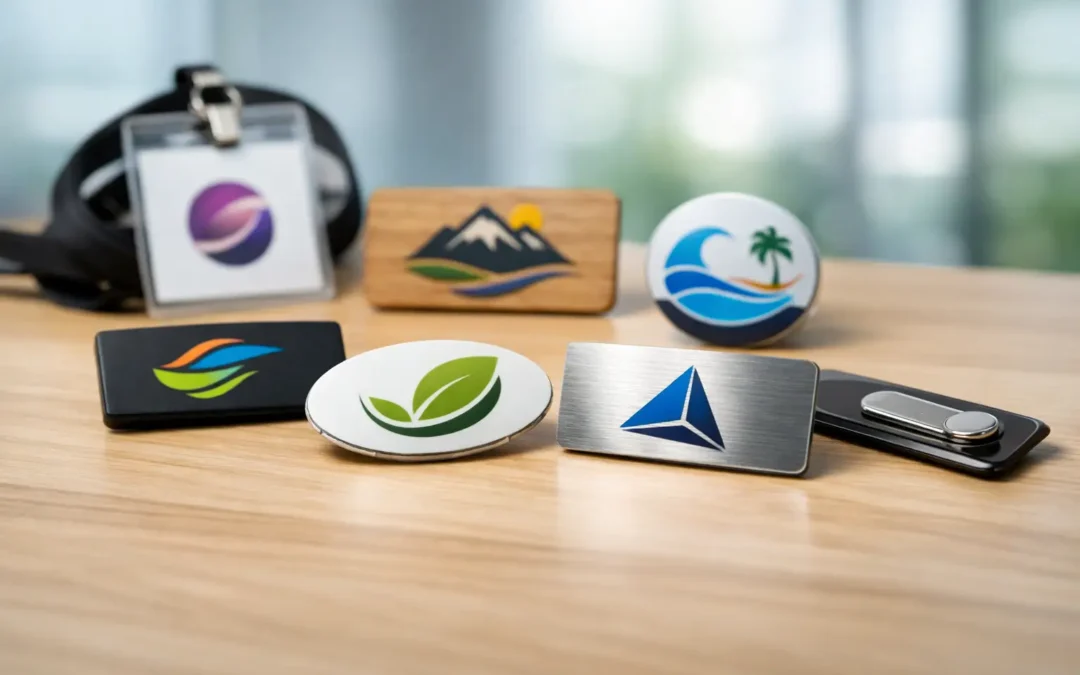
Plastic badges are often a practical choice for businesses that need clean branding at an affordable price point. They can work well for larger teams, temporary events or organisations managing cost across multiple sites. Metal badges generally create a more premium impression and are popular where presentation is a priority, including corporate settings, property sales, membership organisations and formal events.
Engraved badges are valued for durability and readability. Printed badges can allow more flexibility with logos, gradients and detailed brand elements. Domed finishes can add visual impact, although that look may not suit every brand style. If your visual identity is understated, a simpler matte or brushed finish may look more credible.
Attachment method is another detail buyers should not overlook. Pins are secure, but they can mark delicate fabrics. Magnetic fittings are popular because they avoid pin holes and are easy to wear, though they may not be ideal in every environment or for every wearer. Clip options can suit event use, especially when badges are worn for shorter periods.
Design choices that make a badge easier to wear and easier to read
A surprising number of badge problems come down to layout rather than production. The badge may be technically well made, but if the text is too small or the logo dominates the available space, it will not do its job.
The first priority is readability. Staff names should be clear at a glance, without forcing customers to lean in. Job titles can be useful, but only if they add value. On a smaller badge, trying to include too much information often weakens the overall result.
Logo placement should support the name, not compete with it. Strong branding is important, but the badge still needs to function as an identification tool. Colour contrast is another practical issue. Some brand colours look excellent in a style guide but lose clarity when reduced to badge size. Slight adjustments may be needed to keep the badge legible while staying true to the brand.
Consistency across your wider materials also matters. If your team already wears branded polos, lanyards or uniforms, the badge should feel like part of the same system. That is often where artwork support and production guidance save time. Rather than guessing what will reproduce cleanly, buyers can move forward with confidence that the finished item will align with the rest of their presentation.
Who uses custom name badges Australia wide
The demand for custom name badges Australia wide comes from a broad range of organisations, not just large companies. Small business owners use them to present a more established image. Schools and clubs use them for staff, volunteers and committee members. Event organisers rely on them for quick identification and smooth guest interaction. Medical clinics, aged care providers and community organisations value the trust and clarity that visible identification provides.
The buying priorities vary. A marketing manager may focus on brand consistency and finish. An office administrator may care most about easy ordering and dependable turnaround. A volunteer-run association may need a cost-effective option that still looks professional. The common thread is reliability. Buyers want a product that arrives as expected, looks right and performs properly in use.
What to ask before placing an order
A few early decisions can prevent delays and rework later. Start with quantity, because this can affect production method and unit cost. Then confirm whether names will be individualised, whether titles are needed, and whether the badges are intended for ongoing staff use or a specific event.
Artwork quality should be checked before production begins. If your logo file is poor, the finished badge will reflect that. Colour matching should also be discussed early, especially if the badge needs to align with existing signage, uniforms or promotional items.
Timing is another practical issue. If badges are needed for an event opening, conference, seasonal launch or school programme, leave enough production time for proofing and approval. Rush orders are possible in some cases, but they reduce room for refinement.
It also helps to think ahead about repeat orders. Staff change, titles change and organisations grow. A well-managed badge programme should make future additions straightforward rather than starting from scratch each time.
Why service matters as much as the badge itself
Name badges may look simple, but getting them right involves more than choosing a shape and adding a logo. There is artwork setup, material selection, fitting choice, proofing, production timing and delivery coordination. For buyers already juggling uniforms, signage, event materials or other branded items, that extra admin can become a hassle quickly.
That is why a service-led supplier often adds more value than a basic online checkout. Clear advice, practical recommendations and dependable communication can save time and reduce costly errors. It is not just about producing the badge. It is about helping the customer choose a badge that suits the purpose, the brand and the budget.
For organisations ordering across multiple product categories, that support becomes even more useful. A supplier such as ABC2000 can coordinate badges alongside broader branded merchandise and print requirements, which helps keep your presentation consistent and your ordering process more manageable.
A well-made name badge does not need to be flashy to work hard. It simply needs to look right, wear well and represent your organisation with confidence every time someone says hello.