A branded cup handed out at registration can be forgotten by lunch. A well-chosen drink bottle, tumbler or stubby holder can travel to the office, the gym, weekend sport and the worksite for months. That is the difference to aim for when deciding how to brand event drinkware: choose an item people genuinely want to keep, then make your branding clear enough to be remembered.
For Australian businesses, schools, clubs and event organisers, drinkware works hard because it is useful in the moment and visible afterwards. The best result is not simply a logo on a vessel. It is a product that suits the audience, looks professional in photographs and arrives on time for the event.
Start with the event, not the product
Before selecting colours or print positions, consider where and how the drinkware will be used. A corporate conference has different needs from a community fun run, brewery activation, school presentation night or summer festival. Guests at an all-day outdoor event may value insulated bottles. A hospitality launch may call for quality glassware. A club fundraiser may get better value from practical stubby holders that are easy to distribute in volume.
Think about the likely user as well. Staff attending a training day may appreciate a reusable coffee cup or premium insulated tumbler. Families at a sporting event may prefer durable plastic bottles with easy-grip lids. If the drinkware is part of a ticket package or sponsor promotion, it should feel substantial enough to add value without taking too much from the overall event budget.
It also pays to consider venue rules. Some venues restrict glass, while others have refill stations that make reusable bottles particularly useful. Outdoor events need products that cope with handling, heat and transport. Getting these practical details right prevents a smart branding concept from becoming an awkward giveaway.
Choose drinkware people will keep
The product is the foundation of the campaign. A low-cost cup can make sense for large one-day events, but only if it has a clear purpose, such as a reusable festival cup or a tasting vessel. For a smaller guest list, spending more on a durable item may create stronger long-term brand exposure.
Match the item to the occasion
Drink bottles are a dependable choice for active events, staff programs, schools and community groups. They provide a generous branding area and are useful beyond the event itself. Stainless steel bottles offer a more premium feel and help maintain drink temperature, while BPA-free plastic options are often better suited to high-volume promotions and tighter budgets.
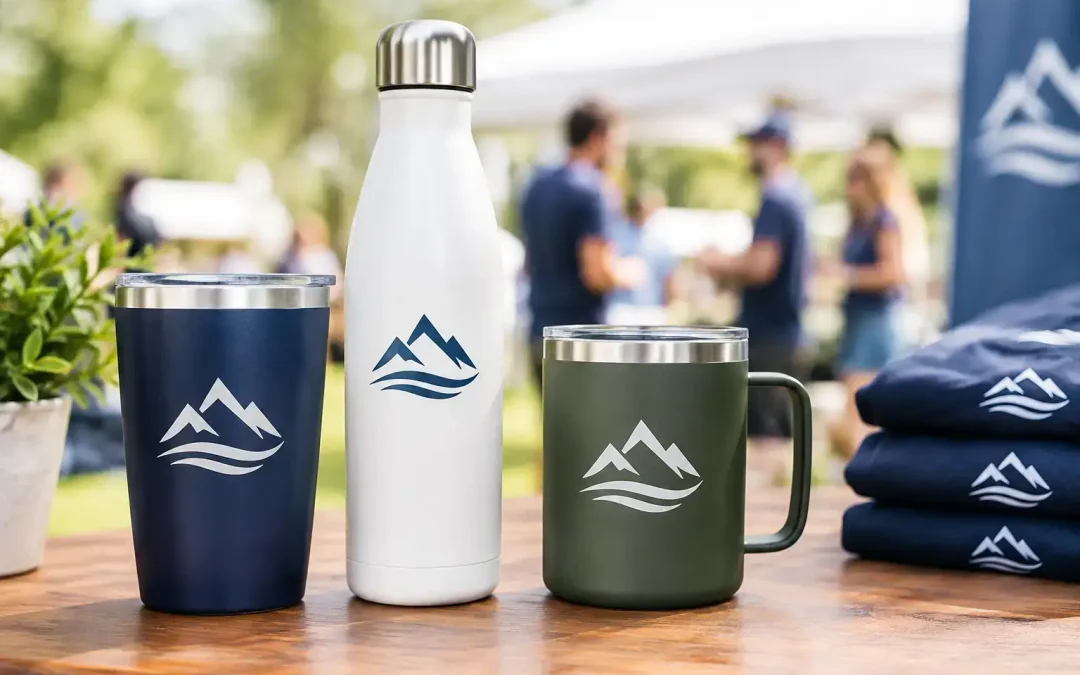
Tumblers and travel mugs are well suited to conferences, professional services, property events and client gifts. They appeal to commuters and office workers, particularly when the lid, capacity and insulation suit everyday coffee or water use. A quality tumbler with a restrained logo can feel more like a useful gift than a promotional item.
Stubby holders remain a strong option for sporting clubs, festivals, hospitality events and Australian summer promotions. They are compact, affordable and highly visible in social settings. Glassware, mugs and bar accessories can also be effective, although they require more care in packing, venue handling and freight.
The trade-off is straightforward: premium products can create a better impression and longer use, while economical items help reach larger crowds. There is no single right choice. The best option is the one that matches your audience, event format and intended lifespan of the promotion.
How to brand event drinkware with clear artwork
Drinkware is curved, handled, tapered and sometimes textured. Artwork that looks strong on a flat business card does not always translate neatly to a bottle or mug. Start with a clean logo file, ideally vector artwork, so it can be sized without losing sharpness. Avoid relying on a small screenshot, web image or compressed file when print quality matters.
Keep the design focused. On many products, a single well-placed logo is more effective than a crowded combination of logo, slogan, website, social handles and sponsor marks. If a message is essential, use a short one. Guests need to recognise it at a glance from across a table, in a photo or while someone is carrying the item.
Colour choice deserves the same attention. Brand colours should be reproduced as accurately as the selected print process and product material allow, but contrast matters just as much. A dark logo on a dark bottle, or a fine white line on a clear cup, can disappear in normal use. A supplier should check the artwork against the product colour and advise if a different print colour, larger mark or simpler layout will give a better result.
Consider the viewing angle too. A logo placed opposite the handle of a mug often faces outward when held by a right-handed user, but this can depend on the intended audience and product style. On bottles and tumblers, a centred front print is usually the safest choice. Where the item will be photographed at a media wall, registration desk or sponsor activation, make sure the branding faces the way attendees and cameras are most likely to see it.
Select a print method that suits the design
The right decoration method depends on the material, shape, artwork and quantity. Screen printing is commonly used for bold spot-colour logos and can be a cost-effective choice for larger runs. Pad printing suits smaller print areas and detailed marks on selected products. Digital printing can support more complex, full-colour designs where the product and print area allow it.
For premium metal drinkware, laser engraving is worth considering. It creates a permanent, refined finish and avoids concerns about printed colour wear over time. The result is usually more subtle than a bright printed logo, which is ideal for corporate gifts, awards, executive events and quality merchandise.
Do not choose solely on the basis of the lowest unit price. A print process that suits the artwork will look cleaner, last longer and protect the professionalism of your brand. Ask to confirm the maximum print area, number of colours, artwork requirements and whether an artwork proof will be supplied before production begins.
Plan quantities, budget and distribution together
Quantity is more than a pricing question. It affects the type of drinkware you can select, the print method available and how the products will be managed on the day. Order enough to cover confirmed attendees, staff, speakers, sponsors and a sensible contingency. For public events, demand can be difficult to predict, particularly where drinkware is included free with entry.
If the item is a premium attendee gift, it may be best distributed at registration or placed in welcome packs. For a promotional activation, a visible display can encourage engagement, but consider whether staff need to collect names, scan tickets or confirm eligibility before handing products out. For clubs and schools, pre-orders can reduce waste and help fund a higher-quality item.
Include setup costs, freight, packing and event deadlines in the budget from the beginning. A product that appears inexpensive can become less economical if it needs individual packaging, rushed production or special delivery arrangements. Planning the full job early gives you more choice and reduces the pressure to compromise on product or print quality.
Allow enough time for approvals and production
Event merchandise should not be left until the final week. There is usually a sequence of decisions: selecting the product, receiving pricing, preparing artwork, approving a proof, allowing for production and arranging delivery. Custom drinkware may also need additional lead time when stock is sourced specifically for your order or when multiple print colours are involved.
Set a firm internal deadline for artwork approval, especially if several stakeholders need to sign off. Last-minute logo changes, revised sponsor details and incomplete artwork are common causes of delays. A clear brief at the start should include the event date, required delivery date, quantity, preferred product, logo files, brand colours and any packaging needs.
ABC2000 can help coordinate those production details, from choosing an appropriate drinkware style to checking artwork and managing delivery timing. That hands-on approach is particularly valuable when the event team is already managing venues, registrations and suppliers.
The most effective branded drinkware earns its place in someone’s routine. Choose something useful, give the artwork room to work and allow enough time for a quality finish. Your event may only run for a day, but the right bottle, tumbler or stubby holder can keep representing it long after the last guest has gone home.