A badge may be small, but it carries a great deal of brand value. The right badge materials help a staff uniform look professional, make a club identity recognisable, or turn an event giveaway into something people keep. The wrong choice can leave a logo looking flat, a pin feeling flimsy or a short-term promotion costing more than it needs to.
For Australian businesses, schools, clubs and event organisers, the best badge is rarely just the most expensive option. It is the one that suits how it will be worn, how long it needs to last, the detail in the artwork and the quantity required. A clear brief at the start helps avoid production delays and makes sure the finished product represents your organisation well.
Start with the job the badge needs to do
Before choosing a finish, consider where the badge will go and what it needs to achieve. A name badge worn by customer-facing staff has different requirements from a lapel pin sold as commemorative merchandise. A campaign button handed out at a community event has a different budget and lifespan again.
For day-to-day staff identification, legibility, comfort and a reliable fastening matter most. For recognition awards, committee pins or anniversary pieces, weight, plating and detail often take priority. Event badges and promotional buttons usually need strong colour impact at an accessible unit price, particularly when ordering in larger quantities.
It also pays to think about the garment or surface. Heavy metal lapel pins can pull on lightweight fabric, while magnets can be a smart alternative for uniforms where pinholes are unwelcome. A practical supplier will ask these questions early, rather than simply sending a generic product option.
Common badge materials and where they work best
Metal badges for lasting presentation
Metal is a popular choice for lapel pins, service badges, commemorative pieces and premium name badges. It has a solid feel, holds its shape and presents a logo with a level of quality that suits professional organisations, sporting clubs and recognition programs.
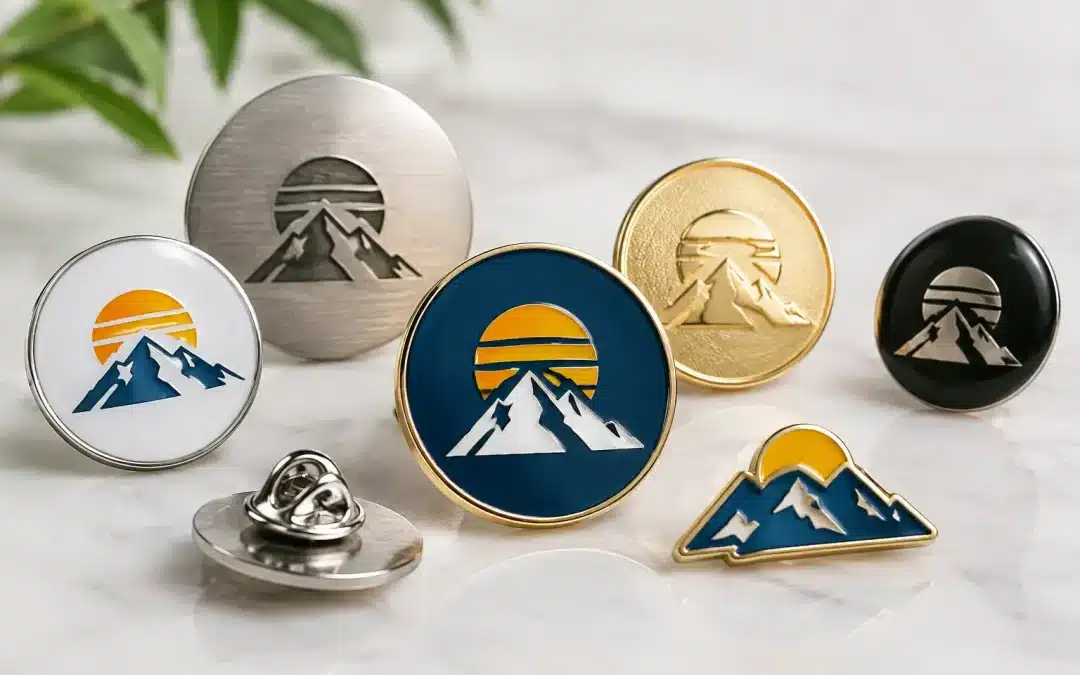
Die-struck metal badges create raised and recessed areas, giving a logo texture and definition. They work particularly well for simple crests, initials and designs with bold lines. Plating choices such as gold, silver, antique brass or black nickel can further change the look, helping a badge align with a formal, heritage or modern brand style.
The trade-off is cost and complexity. Fine detail may need to be simplified, and metal badges can require a longer lead time than standard printed options. They are usually a worthwhile investment when the badge will be worn for years or retained as a keepsake.
Enamel badges for colour and detail
Enamel badges combine a metal base with coloured sections, making them a strong option when brand colours are central to the design. Soft enamel has raised metal outlines around recessed colour, giving the badge a textured finish. Hard enamel is polished smooth, with colour filled to the level of the metal lines for a cleaner, more refined result.
Soft enamel suits club pins, promotional merchandise and designs that benefit from visible texture. Hard enamel is often selected for corporate lapel pins, milestone awards and high-quality retail items. Both can produce excellent colour contrast, but very small text, subtle gradients and photographic artwork may not reproduce as clearly as they do in print.
If colour matching is critical, provide approved artwork and colour references from the outset. Screen colours can be misleading, and an experienced production team can advise whether the chosen badge material and process will deliver the closest practical match.
Printed badges for flexible branding
Printed badges are ideal where artwork includes full colour, shading, photos or detailed graphics. A printed surface allows greater creative freedom than many metal processes, making it useful for campaign artwork, school designs, event themes and name badges with changing information.
Digital print is well suited to lower quantities and variable designs, such as individual staff names or different event roles. Screen printing can be a cost-effective choice for larger runs with solid spot colours. A clear protective coating or resin dome may be added to improve durability and give the badge a polished appearance.
Printed badges are not automatically a budget-only choice. They can look sharp and professional when the artwork is prepared properly. However, they may not have the same depth, weight or long-term wear resistance as a metal or enamel badge, particularly in demanding environments.
Plastic and acrylic badges for everyday use
Plastic and acrylic badge materials are lightweight, versatile and practical for staff identification, visitor badges, schools and service teams. They can be printed in full colour, laser engraved or produced in a range of shapes and sizes. Acrylic can also create a clean, contemporary finish that suits modern retail, hospitality and office environments.
These materials are especially useful where badges need to be comfortable through a long shift or produced with individual names and job titles. They are generally more affordable than custom metal badges and are easy to replace as staff details change.
The main consideration is presentation. Plastic can be the right choice for a busy workplace, but it may not deliver the ceremonial feel required for an executive award, long-service pin or formal commemorative item. Matching the material to the occasion prevents a practical badge from looking underdone.
Button badges for events and promotions
Button badges remain one of the most effective promotional formats for campaigns, fundraisers, elections, school events and product launches. Typically made with a printed paper insert, a metal shell and a pin backing, they offer bright graphics and broad appeal at a manageable price point.
Their strength is speed and visibility. A bold message, mascot, event date or club logo can be seen from a distance, and recipients are more likely to wear a badge when the design feels fun or relevant. Button badges are generally intended for shorter-term use, so they are less suitable for permanent staff identification or premium corporate gifting.
Fastenings are part of the material decision
A well-made badge still needs the right attachment. Butterfly clutches are common on lapel pins because they are secure and familiar. A brooch pin suits larger badges, while a safety pin backing is standard for many button badges.
Magnetic backings are popular for name badges because they help protect uniforms from pinholes. They are convenient, though they may not be suitable for every wearer or workplace. Some medical devices can be affected by magnets, so organisations should check their own requirements before making magnets the standard option.
For badges used outdoors, in hospitality, on uniforms or at regular events, choose a fastening that will stand up to repeated handling. It is a small detail that has a direct effect on whether people actually wear the badge.
Artwork can change the best material choice
The best badge materials cannot compensate for artwork that is too crowded or too small. A logo that looks excellent on a letterhead may need adjustment to work at badge size. Fine type can fill in during production, and closely matched colours may lose definition when viewed from a distance.
Keep key elements clear, use strong contrast and avoid relying on tiny details. Where a crest or logo has many elements, consider a simplified badge version while retaining the features that make it recognisable. This is particularly relevant for enamel and die-struck designs, where each line and colour area needs enough space to reproduce cleanly.
Artwork support is valuable here. A production proof gives you the chance to check layout, spelling, colour direction and finishing details before the order proceeds. Taking care at this stage is far easier than correcting hundreds of completed badges.
Balance budget, quantity and delivery timing
Quantity has a major effect on badge pricing. Custom moulds, plating setups and specialised finishes can make premium badges more cost-effective at higher volumes, while printed or standard-format options may be more practical for smaller orders. If you expect to reorder regularly, choosing a consistent specification can also make future orders simpler.
Delivery timing matters just as much. Event dates, staff inductions and presentation nights do not move easily. Allow time for artwork approval, production and freight, particularly for detailed custom badges. If the deadline is tight, say so at the enquiry stage. There may be a material or production method that delivers the result you need without compromising the design.
ABC2000 can help compare options across branded badges and related promotional items, so your order works as a coordinated part of your wider brand presentation rather than a one-off purchase.
The right badge should feel appropriate the moment it is handed over. Bring together the purpose, artwork, budget and timeframe, then choose the material that lets your logo do its job with confidence.