
A logo on a polo shirt, a volunteer uniform or a school bag has a job to do long after the first event finishes. It needs to identify people clearly, look professional and hold up to regular wear. When comparing embroidered patches vs badges, the right choice comes down to where the item will be used, how much detail your design contains and what you need it to say about your organisation.
The terms are sometimes used interchangeably, particularly when people refer to an embroidered badge. In practical purchasing terms, however, an embroidered patch is a textile emblem sewn onto clothing or gear, while a badge may be embroidered, metal, printed, PVC or another format entirely. Knowing the difference helps avoid ordering an attractive product that is wrong for the job.
Embroidered Patches vs Badges: The Core Difference
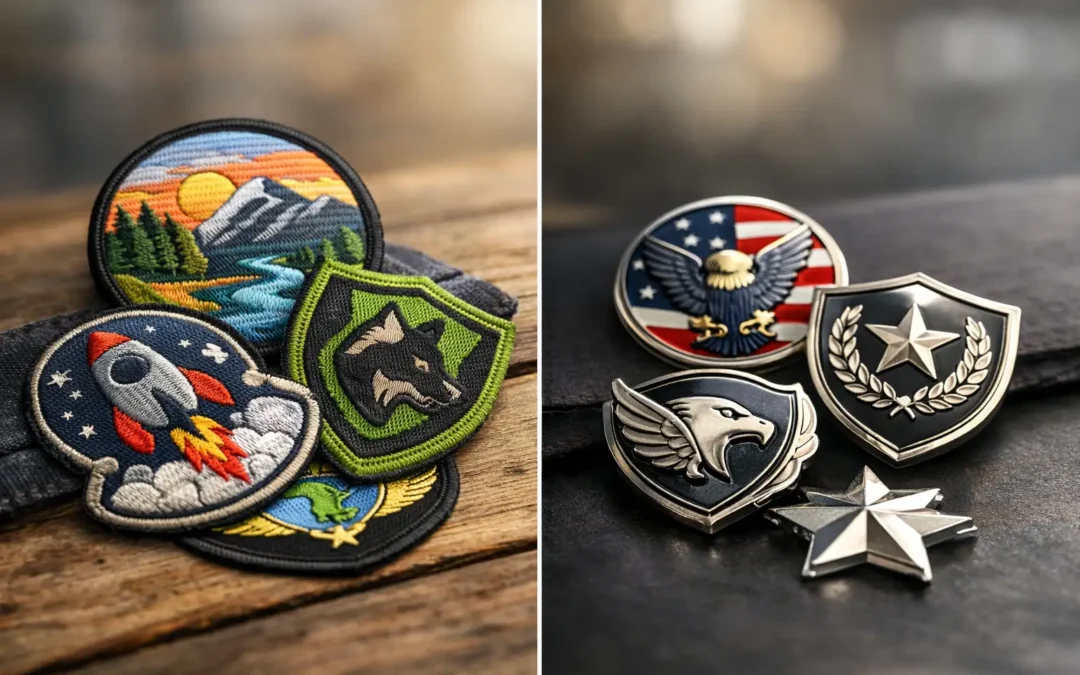
An embroidered patch is made by stitching coloured thread into a fabric backing, usually with a merrowed edge or a clean laser-cut border. It has texture, dimension and the familiar appearance associated with sports clubs, emergency services, schools, scouts and workwear. Patches can be sewn on, heat applied, attached with Velcro or supplied with a peel-and-stick backing for limited-use applications.
A badge is a broader category. It might be a small metal lapel badge for staff recognition, a printed name badge for customer-facing employees, a button badge for a campaign, or an embroidered emblem for a uniform. The material and attachment method vary according to the purpose.
That distinction matters because a badge often communicates an individual role, name, achievement or short-term message. A patch is usually part of a garment or piece of equipment and supports a lasting team identity. A volunteer may wear a name badge at the registration desk, for example, while the organisation’s embroidered patch remains on their jacket year after year.
When Embroidered Patches Are the Better Choice
Choose an embroidered patch when durability and a traditional uniform finish are priorities. The stitched surface adds perceived value and is easy to recognise from a reasonable distance, especially for bold logos, simple shapes and strong club colours.
Patches work particularly well on polos, jackets, shirts, caps, bags, beanies and workwear. For clubs and associations, they create a sense of membership that a printed logo does not always achieve. For businesses, they help staff look consistent across different garment styles and sizes. A patch can also be produced separately from the clothing, which is useful if uniforms are supplied at different times or sourced through more than one channel.
An embroidered finish is forgiving on hard-wearing fabrics and usually handles repeated use well when attached correctly. Sew-on patches remain the most secure choice for garments that are washed frequently. Heat-seal backings offer speed and a tidy finish, but they need suitable fabric and correct application. Velcro-backed patches are practical for security teams, field staff or clubs that need to change identifiers between activities.
There are trade-offs. Thread has physical thickness, so tiny lettering, intricate linework and subtle shading can become difficult to reproduce. A detailed corporate logo may need simplifying before it is converted into embroidery. This production step is called digitising, and it determines the stitch directions, thread colours and density required to produce a clean result.
Size also matters. A large back patch gives artwork room to breathe, while a small chest patch needs a bolder, simpler version of the logo. Trying to fit a slogan, phone number and fine illustration into a 60 mm badge is one of the fastest ways to lose legibility.
When a Badge Delivers Better Value
Badges are often the smarter choice when you need personal identification, fine detail, a polished corporate finish or a lower-cost item for a short campaign. The best format depends on the message.
Printed name badges are ideal for reception teams, retail staff, healthcare workers and event crews. They allow names, job titles and logos to be displayed clearly, and magnetic fittings can protect clothing from pinholes. For conferences and community events, printed or button badges are a straightforward way to identify attendees, speakers or volunteers.
Metal lapel badges suit recognition programs, anniversaries, executive gifts and formal occasions. They have a compact, premium appearance and can reproduce sharp shapes, plated finishes and enamel colours. They are not designed to replace a large uniform emblem, but they carry authority on a blazer, lanyard or presentation box.
PVC badges are useful where weather resistance, colour accuracy or shaped designs are important. Their raised rubber-like finish suits outdoor groups, trades, junior sport, motoring events and bags that face rough handling. Unlike embroidery, PVC can accommodate a more dimensional look without thread limits, although it has a distinctly modern appearance that will not suit every brand.
The key question is whether the item must be read at close range or recognised across a room. Names and detailed information need a badge designed for clarity. A team logo that should stand out from the sideline or workshop floor is often better as an embroidered patch.
Match the Finish to the Wearer and Setting
A practical way to choose is to begin with the setting rather than the product. Consider who will wear it, what they will be doing and how long the branded item needs to last.
For a local football club, embroidered patches on outerwear and kit bags offer durability and tradition. Metal lapel badges can then be reserved for life members, committee recognition or fundraising. A school may use embroidered house patches on blazers, printed badges for student leaders and name badges for visitors. The three products serve different purposes while presenting one consistent identity.
For a business, a neat embroidered logo patch can be effective for tradespeople, warehouse teams and mobile service staff. In a showroom, clinic or office, an engraved or printed name badge may feel more appropriate. A hospitality venue might use both: an embroidered logo on aprons and clear staff name badges on the front of house uniform.
Events have their own priorities. If the event is a one-day fundraiser, button badges or printed event badges generally offer better value and faster distribution. If the event is an annual fixture with branded volunteer jackets, embroidered patches are worth the investment. They can be reused on future garments and help build recognition over time.
Artwork, Colour and Production Details to Check
Good branding starts before production. Supply the cleanest version of your logo available, preferably vector artwork such as AI, EPS or PDF. High-resolution artwork can also help, but a small web image is rarely enough for accurate embroidery or badge manufacturing.
Ask for an artwork proof before production begins. This is your opportunity to check spelling, layout, logo proportions, thread or print colours, border shape and attachment method. If your brand uses specific PMS colours, share those details. Thread and enamel colours are matched as closely as practical, but material, texture and lighting can affect the final appearance.
For embroidered patches, confirm the finished size in millimetres rather than relying on a description such as “small” or “standard”. Check whether the edge will be merrowed, heat-cut or left plain, and make sure the backing suits the garment. A sew-on patch gives flexibility for tailors and uniform suppliers, while heat-seal can reduce application time for larger runs.
For badges, check the fastening. Pin backs are economical and familiar, magnetic backs are garment-friendly, and safety pins are common for temporary event use. Lapel badge fittings should suit the weight and thickness of the finished piece. These details may look minor on a quote, but they affect how comfortably and confidently people wear the product.
Budget, Quantities and Timing
The lowest unit price is not always the lowest project cost. Embroidered patches involve setup through digitising, which can make very small orders less economical. Larger quantities spread that setup cost and are often worthwhile for organisations with ongoing membership, staff turnover or annual events.
Badges vary widely in cost because their materials and processes vary. A simple printed button badge is suitable for high-volume promotion, while custom enamel lapel badges are more of a keepsake or recognition item. Consider the expected lifespan before choosing: it makes sense to spend more on a patch for a uniform worn weekly than on an attendee badge used for one afternoon.
Allow sufficient lead time for artwork approval, sampling where required, production and delivery. If you have a launch date, presentation night or event deadline, raise it early. A supplier that manages artwork and production coordination can help identify the most reliable option before the design is locked in.
Choose the Item That Supports Your Brand in Use
There is no single winner in embroidered patches vs badges. Patches are a strong fit for lasting uniform identity, texture and hard-wearing use. Badges offer greater flexibility for names, recognition, campaigns and detailed information. Many organisations get the best result by using both in the right places.
Before ordering, hold the proposed item against the actual garment, event plan or staff role it is intended for. If it looks clear, feels appropriate and can be worn comfortably, it is far more likely to become a branded item people are proud to keep using.