
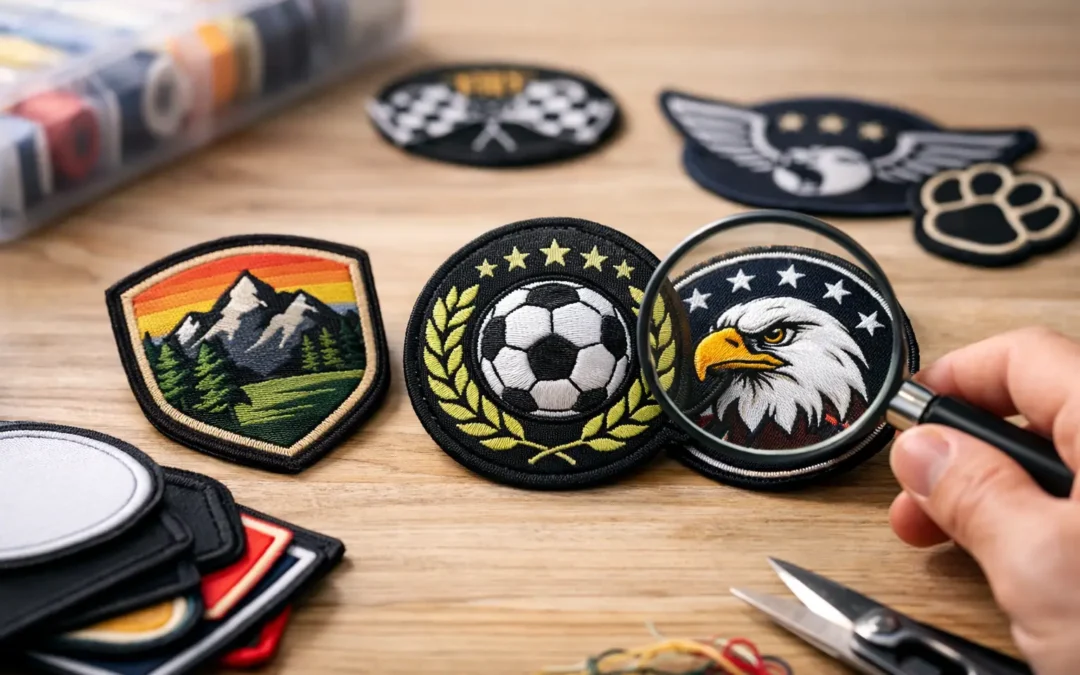
A club badge usually gets noticed long before anyone reads a flyer or checks a website. It sits on a jacket, cap, polo or bag and quietly does its job – showing belonging, history and standards. That is why embroidered patches for clubs remain one of the most practical ways to build a consistent identity across members, volunteers and supporters.
For sporting clubs, community groups, motorcycle clubs, school groups and special interest associations, patches do more than decorate a garment. They create recognition at events, make members easier to identify and give people something they are proud to wear. When the patch is well made, it lifts the look of the whole uniform. When it is rushed or poorly specified, it can do the opposite.
Why embroidered patches still work so well for clubs
A good patch has staying power. Unlike some printed applications that can crack, peel or fade with heavy wear, embroidery has texture and presence. It feels more substantial because it is stitched, not just applied as surface decoration. That matters for clubs where garments are worn repeatedly to training, meetings, fundraising days, award nights and away events.
There is also a practical branding benefit. Embroidered patches suit a wide range of garments and accessories, which makes them useful for clubs managing mixed apparel. You might have polos for committee members, hoodies for juniors, caps for volunteers and bags for equipment. A patch-based approach can help keep branding consistent across all of them.
Cost is another reason they stay popular. For many clubs, especially volunteer-run organisations, budgets need to stretch across uniforms, signage, fundraising materials and event setup. Patches offer a professional look without requiring every item to be custom manufactured from scratch. That makes them a sensible option for clubs that want quality and flexibility at the same time.
What makes embroidered patches for clubs look professional
Not all patches are equal. The difference usually comes down to design suitability, stitch quality, edge finish and backing choice. If any one of those is overlooked, the final result can feel average even if the artwork itself looked fine on screen.
Design is the first checkpoint. Club logos often include shields, mascots, founding years, mottos and small lettering. Some of that detail will reproduce beautifully in embroidery, and some of it will not. Fine lines, tiny type and complex gradients usually need to be simplified. This is not a compromise for the sake of it. It is how you get a cleaner patch that can be read from a distance and stitched consistently across the full run.
Thread coverage also matters. A patch with strong, even stitching and solid fill areas looks sharper and lasts better. Sparse stitching can make colours look inconsistent and leave the patch looking thin. On the other hand, overloading a design with too much stitch density can create stiffness and distortion. This is where experienced production guidance makes a difference, because the best result is rarely about putting in the maximum amount of thread.
The border is another detail that deserves attention. Merrowed edges suit traditional club patches and give a classic, durable finish, especially on simple shapes like circles, rectangles and shields. Laser-cut or heat-cut edges are often better for more custom outlines. The right edge depends on the design itself, not just preference.
Choosing the right backing for how your club uses them
Backing choice affects both convenience and durability. There is no single best option for every club because usage varies.
Sew-on patches are the most secure for long-term wear. If club uniforms are washed often, worn outdoors or expected to last several seasons, sew-on is usually the safest choice. It takes a bit more effort during application, but the patch stays put and handles repeated use well.
Iron-on backings can work well for simpler applications or when clubs need members to attach patches themselves. They are convenient, but they are not always ideal for every fabric or every wear condition. Jackets, heavy cotton items and occasional-use garments can suit iron-on patches. Stretch fabrics or items that go through frequent washing may need something stronger.
Velcro backing is useful where patches need to be changed or removed, such as committee roles, event staffing or tactical-style uniforms. It adds flexibility, though it can also add cost and bulk. For clubs that rotate titles or seasonal roles, it can be worth it.
Adhesive options have their place for temporary use, but for most club apparel they are not the first choice. If the patch needs to represent the club well over time, a more permanent attachment method is generally better.
Design decisions that affect cost and lead time
When buyers ask why patch pricing varies, the answer is usually in the production details. Size, stitch count, number of colours, shape complexity and backing all affect cost. So does quantity.
Larger patches need more thread and more machine time. Intricate designs require more setup and more careful digitising. Unusual shapes may need custom cutting. If your club needs several versions – perhaps a main crest, a committee patch and a junior variation – that can also affect pricing because each version needs its own setup.
Quantity has a strong impact on unit cost. Ordering very small runs is possible, but the setup side of embroidery means the per-piece price will usually be higher. Clubs that can combine orders across teams, seasons or merchandise ranges often get better value. It is worth thinking ahead rather than reordering in dribs and drabs.
Lead time depends on artwork readiness, approvals, production load and delivery requirements. If the design needs significant redraw work to suit embroidery, that should be factored in early. Clubs ordering before a major event, season launch or presentation night are better off allowing time for artwork checks and sample approval rather than leaving it to the final week.
Where clubs use patches most effectively
Patches are often associated with jackets and blazers, but their use is broader than that. On polos and hoodies, they can add a premium look compared with direct printing. On caps and beanies, they can create a more structured branded finish. On bags, satchels and travel gear, they help identify club property while reinforcing the club name in public.
They also work well beyond core uniforms. Many clubs use patches on supporter merchandise, anniversary apparel and commemorative items. A 25-year or 50-year patch can turn an ordinary garment into a keepsake. That can be useful not just for pride, but for fundraising as well.
For volunteer-led groups, patches can help distinguish roles at busy events. A first aid team, canteen crew, organisers and officials are easier to spot when their gear carries clear identification. That improves presentation and can make event operations smoother.
Getting the best result from your supplier
The easiest way to avoid disappointment is to treat patches as a production job, not just a quick online purchase. Good outcomes come from clear artwork, realistic expectations about embroidery detail and proper advice on materials and attachment methods.
Before ordering, it helps to confirm the intended garment, patch size, quantity and deadline. A patch that looks excellent on the back of a jacket may be too detailed for the chest of a polo. Likewise, a patch intended for rugged workwear needs different thinking than one for a presentation blazer.
It is also worth checking colour matching carefully. Club colours are rarely negotiable, especially for established organisations. Thread colours do not behave exactly like ink on paper or graphics on a screen, so approval should be based on practical production knowledge rather than assumptions.
This is where working with an experienced supplier matters. A business like ABC2000 can guide clubs through artwork adjustments, backing choices and production planning so the final patch suits both the design and the way it will be used. That support is valuable when deadlines are fixed and volunteers or staff do not have time to troubleshoot every detail themselves.
Embroidered patches for clubs are a long-term branding choice
There is a reason clubs keep coming back to patches. They are visible, durable and adaptable across uniforms, merchandise and event wear. More importantly, they carry meaning. Members notice when a patch looks sharp, feels solid and reflects the standards of the club itself.
If your club is planning new apparel or refreshing existing stock, it pays to slow down at the selection stage and get the specification right. The best patch is not always the cheapest or the most detailed. It is the one that fits the garment, suits the logo and holds up after real use – because that is the patch members will keep wearing with pride.