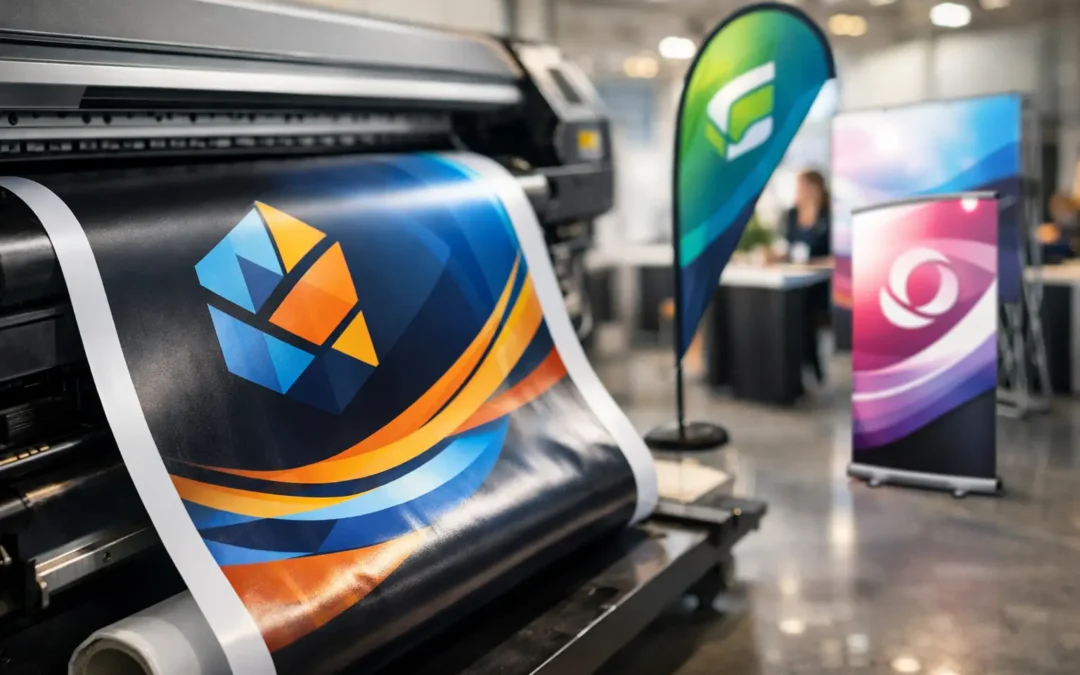
A banner has only a few seconds to do its job. At a trade show, outside a shopfront, beside a registration desk or on the sideline at a local event, display banner printing needs to make your name, message and visual identity easy to notice from the right distance. A well-produced banner gives your organisation a professional presence without requiring a complicated campaign.
For Australian businesses, clubs, schools and event organisers, the best choice is rarely just the biggest banner or the lowest price. It is the format that suits the location, artwork that remains readable, and materials that will hold up for the intended use. Getting those details right protects your brand and makes your marketing budget work harder.
Choosing the right display banner printing format
The first question is not what your banner should look like. It is where it will be used. Indoor displays, outdoor promotions, exhibitions and sporting grounds each place different demands on size, stability and visibility.
Pull-up banners are a practical choice for receptions, conferences, retail spaces and presentations. They pack down neatly, are quick to set up and can be moved by one person. They work best when the message is simple: a logo, a strong image, a short statement and clear contact details. Because people often view them while walking past, a pull-up banner should not be treated like a brochure page.
Fabric banners and media walls suit organisations that need a more polished backdrop for launches, awards nights, photo opportunities or repeated events. They provide a larger branded surface and can create consistency across media photos and social content. Their value is strongest when the design is built around the people or products that will appear in front of them. Keep important logos and wording clear of likely standing positions.
Vinyl banners remain a dependable option for outdoor events, building sites, community fundraisers, markets and sporting clubs. They can cover a large area at an affordable cost and are highly visible from a distance. Outdoor banners need suitable finishing, such as reinforced edges and eyelets, so they can be secured properly. Wind, rain, sun exposure and the fixing point all affect which material and finish are appropriate.
Teardrop, feather and flag-style banners attract attention through movement and height. They are useful near entrances, along pathways, at car yards, open days and outdoor activations. Their curved shape means the artwork must be designed specifically for the template. A rectangular design squeezed into a feather banner can leave logos distorted or key information difficult to read.
Match the banner to viewing distance
A banner viewed from two metres away can carry more detail than one intended to be read from across a car park. This sounds obvious, yet crowded layouts are one of the most common reasons banners underperform.
For close viewing, such as an indoor pull-up banner, include a brief benefit statement, a product image or service categories, and a phone number or website if needed. For long-distance viewing, concentrate on the organisation name, logo, major message and perhaps a simple directional instruction. Large lettering, strong contrast and generous clear space will usually be more effective than extra copy.
Think about the path people take through the space. An event entrance may need a welcoming message, while a banner beside a product display should support a sales conversation. A sponsor banner around a sporting ground has a different role again: repeated logo exposure matters more than explaining every service offered.
Artwork that prints clearly and looks professional
High-quality display banner printing starts with suitable artwork. A sharp image on a mobile screen is not necessarily suitable for a large printed panel. Low-resolution files can become soft or pixelated when enlarged, particularly photographs, web graphics and logos copied from online sources.
Vector logo files are generally the best option because they can scale cleanly without losing definition. Common vector formats include AI, EPS and print-ready PDF files. If these are not available, a high-resolution PNG or PDF may still be workable, depending on the design and finished size. Supplying the best file you have at the start helps avoid delays and unnecessary redesign work.
Colour also needs practical attention. Brand colours can appear different across screens, printed paper, fabric and vinyl. A reliable supplier will check artwork requirements and discuss colour expectations before production, especially where a particular corporate colour or existing campaign material must be matched. Exact matching can depend on the print process and substrate, so it is better to raise the requirement early than assume every surface will reproduce colour identically.
Avoid placing fine lines, tiny text or pale wording over a busy photograph. These elements may be technically present in the file but still disappear at normal viewing distance. Strong contrast makes a difference. Dark text on a light background, or light text on a dark background, is generally easier to read than colours with similar tones.
Keep the message focused
A banner is a sign, not a catalogue. It should answer one clear question: what do you want the viewer to notice or do? That might be recognising your company name, finding the registration area, visiting a stand, supporting a sponsor or learning about a featured service.
Start with the logo and the main message. Then add only the details that genuinely help a person take the next step. A phone number may be useful for a permanent shopfront banner, while a QR code can suit an exhibition where visitors have time to scan it. Neither needs to appear if it competes with the core message.
If your organisation uses branded uniforms, tablecloths, promotional pens, drinkware or event merchandise, carry the same logo treatment, colours and typefaces into the banner artwork. Consistency makes the whole display look organised and gives customers confidence that they are dealing with an established business or group.
Materials and finishes affect the life of the banner
The right material depends on how often the banner will travel, where it will be displayed and how long it needs to last. A lightweight indoor pull-up banner may be ideal for monthly presentations but unsuitable for a windy outdoor oval. Likewise, a heavy-duty outdoor banner can be unnecessary for a one-day conference display.
For outdoor vinyl banners, hems and eyelets add strength at the points where the banner is tied or fixed. Do not pull a banner so tightly that it is under constant strain, particularly in exposed areas. Allowing a little movement and using appropriate ties can reduce the risk of tearing. Mesh material may be considered for windy locations because it allows some air to pass through, although it can affect the density of the printed image.
For portable displays, ask about the carry case, base type and replacement options. A cheaper stand may be suitable for occasional use, but organisations attending regular expos or travelling between branches may benefit from a more durable unit. This is a sensible place to weigh upfront cost against years of use.
Storage matters as well. Roll banners carefully into their cassette, keep fabric displays clean and dry, and avoid leaving printed materials in hot vehicles for extended periods. Simple care helps retain colour and presentation for future events.
Plan production around your event date
Banner projects often become urgent because the event date has been booked long before the display requirements are finalised. Allowing time for artwork checks, proofs, production and delivery gives you better choices and reduces the risk of rushed compromises.
Before requesting a quote, have the intended size, quantity, use location, deadline and artwork status ready. If you are unsure about the format, provide a short description of the venue and how the banner will be used. A hands-on supplier can recommend an option that fits the job rather than selling a standard product that may not suit it.
ABC2000 supports customers with product selection, artwork guidance and production coordination across banners and wider branded merchandise. That is useful when an event needs more than one item and the final presentation must look coordinated.
It also pays to order with practical extras in mind. A replacement banner, spare base, additional signage for another entrance or matching counter display may be more economical to arrange during the initial project than as a separate urgent order later. This depends on your budget and storage capacity, but it is worth considering for recurring events.
Make every banner earn its place
The most effective banners are specific to their setting and clear about their purpose. They do not try to say everything about the organisation. Instead, they create recognition, direct people confidently and reinforce the quality of the experience around them.
Before approving artwork, stand back from the screen and ask whether someone unfamiliar with your business could understand the main message in three seconds. If the answer is yes, your banner is ready to work hard wherever your brand needs to be seen.