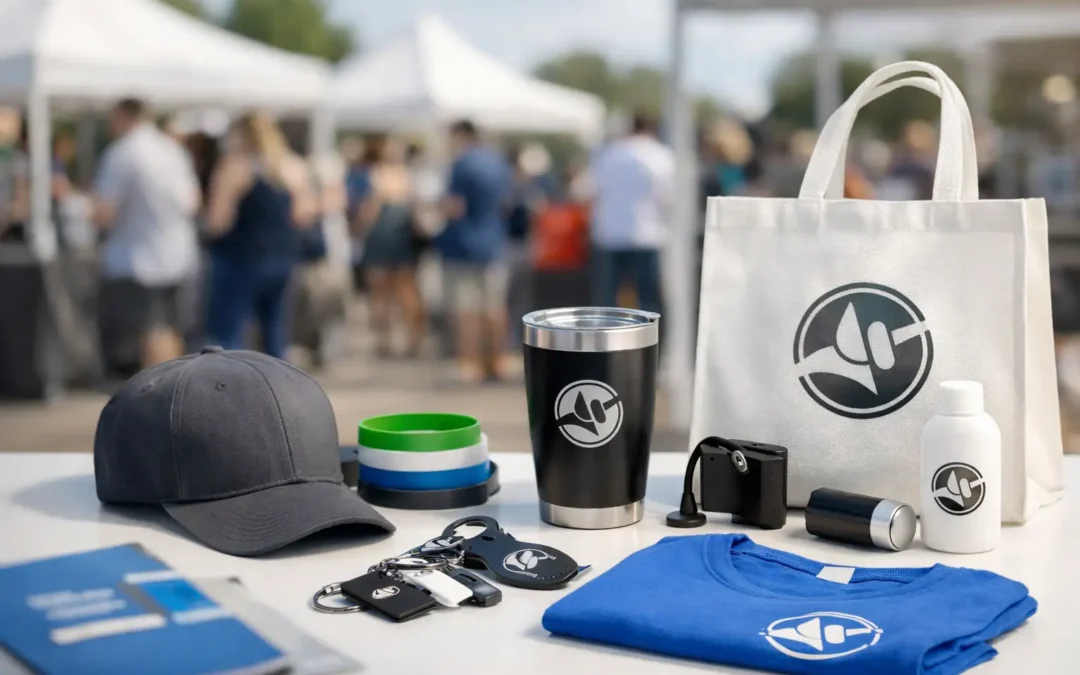
When an event is only running for a few hours or a few days, every branded item has to earn its place. The best promotional products for events do more than put a logo in someone’s hand. They help people find your stand, remember your name, feel part of the occasion and take that brand impression home with them.
That is where many event buyers get caught. A product might look good in a catalogue, but if it does not suit the crowd, the setting or the timing, it quickly becomes wasted spend. For businesses, schools, clubs and organisers across Australia, the smarter approach is to choose merchandise around the job it needs to do.
What promotional products for events should actually achieve
At an event, branded merchandise usually needs to do one or more of four things. It needs to attract attention, support the event itself, create a takeaway reminder or build group identity. Once you know which role matters most, product selection becomes much easier.
If your priority is foot traffic, visibility matters more than novelty. Banners, balloons, branded table covers and display material often work harder than small giveaways because they help people notice you before any conversation starts. If your goal is brand recall after the event, a practical item such as a pen, notebook, mug or drink bottle usually delivers better value than a gimmick that gets binned by the end of the day.
For team-based events, the focus shifts again. Lanyards, badges, scarves, beanies and branded apparel can help volunteers, staff or members look organised and easy to identify. That improves the event experience while reinforcing your brand at the same time.
Match the product to the event type
Not all events call for the same merchandise. A trade show, school fundraiser, sports carnival and council community day all have different audiences, different movement patterns and different expectations.
Trade shows and business expos
At trade shows, people are usually carrying bags and collecting information quickly. Useful, compact items perform well because they are easy to keep. Pens, notebooks, keyrings, aluminium coasters and quality drinkware tend to work because they have a clear purpose after the event.
This is also where presentation matters. If your stand looks polished but the giveaway feels cheap, the mismatch stands out. A smaller quantity of better-quality merchandise often makes more sense than ordering a large run of low-cost items that do not reflect the professionalism of your business.
Community events and festivals
Community events are broader and often more family-focused. Products with wide appeal work best here, especially items that are easy to hand out, wear or use on the day. Balloons, badges, stubby holders, drink bottles and caps can all suit this setting, depending on the audience.
The practical point is distribution. Outdoor events can be busy, windy and spread across a large area. Products need to be durable, easy to transport and simple to manage from a stall or registration table.
School, club and association events
For schools, clubs and volunteer-led organisations, budget and identity usually go together. Merchandise needs to be affordable, but it also needs to help people feel connected to the group. Branded scarves, beanies, patches, lapel pins and lanyards can work particularly well because they build belonging rather than just visibility.
In these settings, repeat use matters. A commemorative item from a milestone event or annual presentation day may have stronger long-term value than a generic giveaway. It depends on whether the event is about promotion, fundraising, recognition or participation.
The best event products are usually practical
There is a reason practical items remain popular year after year. People keep what they can use. That sounds obvious, but it is still one of the most overlooked parts of event planning.
A branded mug on an office desk, a pen in a drawer, a stubby holder at a barbecue or a notebook used in meetings keeps your name in front of people long after the event is over. That ongoing exposure is often where the real value sits.
Practical does not have to mean dull. The right product can still feel considered and on-brand. The difference is that it serves a purpose beyond the moment of handover. If you are working with a fixed budget, that usually gives you a better return than chasing novelty for its own sake.
Quality matters more than many buyers expect
Event merchandise is often judged in seconds. The print clarity, the feel of the material and the way colours reproduce all influence how your brand is perceived. A blurred logo, poor stitching or thin material can make even a well-known organisation look careless.
This is especially important for customer-facing events where your merchandise becomes part of the brand experience. If you are handing products to clients, sponsors, donors or prospective members, quality is not a small detail. It is part of the message.
That does not mean every event requires premium products. It means the finish should match the purpose. A low-cost giveaway can still be well produced. The key is choosing items that suit your budget without compromising basic presentation.
Branding needs to suit the product
One common mistake is trying to force the same artwork onto every item. A logo that looks excellent on a banner may not work as well on a keyring or badge. Fine details, small text and complex colour blends do not always translate neatly across different materials and print methods.
That is why artwork support and production guidance make a real difference. Sometimes the best result comes from using a simplified logo version, adjusting the layout or selecting a different branding method altogether. Screen printing, embroidery, engraving and full-colour print each have strengths, and the right choice depends on the item.
This is one of the main advantages of dealing with an experienced supplier rather than trying to piece an event order together across multiple vendors. You reduce the risk of inconsistency and save time on approvals, coordination and delivery.
Timing can make or break an event order
Promotional products for events are often ordered later than they should be. The venue is booked, the run sheet is underway, invitations are out, and then someone remembers the badges, banners or giveaways. At that point, product choice can narrow quickly.
Lead times vary depending on stock availability, branding method, artwork approval and quantity. Custom items and specialist products usually need more time than standard catalogue lines. Freight and event dates also need breathing room, particularly for larger or multi-item orders.
The practical answer is to work backwards from your event date and allow time for proofing, production and any last changes. If multiple products are involved, coordinated scheduling becomes even more important. A dependable supplier should be able to guide that process clearly and keep communication straightforward.
A broader product range usually gives better results
Many event buyers start with one product in mind, then realise they also need display material, staff identification, printed handouts or a second giveaway for a different audience. That is where a broad supplier can save a lot of effort.
Instead of ordering banners from one business, lanyards from another and mugs from somewhere else again, it is often more efficient to manage the project through one experienced team. You get better brand consistency, fewer moving parts and clearer accountability.
For organisations that run multiple events across the year, that support becomes even more valuable. Once your branding requirements, colour expectations and typical lead times are understood, future ordering becomes much simpler. That is part of why many buyers prefer a service-led supplier like ABC2000 rather than a narrow online reseller.
How to choose with confidence
If you are deciding between options, start with three questions. Who is receiving the item, what do you need it to achieve, and how long do you want the brand impression to last? Those answers will usually point you in the right direction.
From there, weigh up quantity against quality, think about how the item will be distributed, and check whether your artwork suits the product. If the event includes staff, guests and sponsors, you may need more than one category of merchandise rather than a single item for everyone.
The strongest event merchandise plans are rarely the flashiest. They are the ones that are well matched to the audience, well branded and delivered on time.
A good event comes together through details people barely notice when everything is done properly. Branded merchandise is one of those details – and when it is chosen with care, it keeps working long after the marquees come down.