
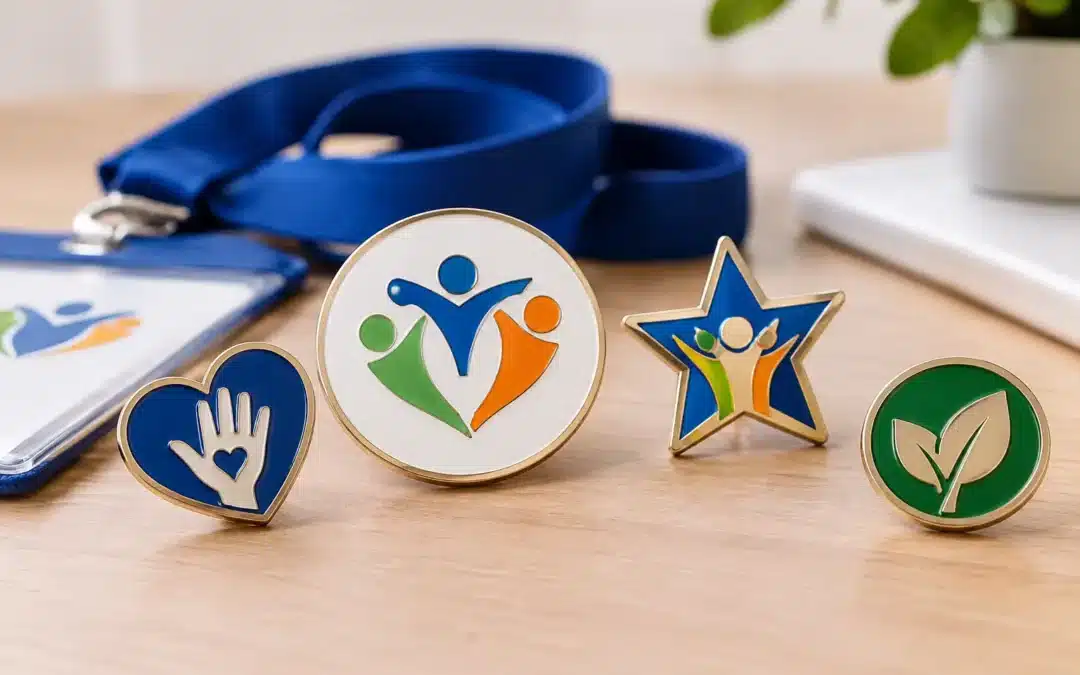
A volunteer who has given up their Saturday morning for five years does not need a generic thank-you email. They deserve something they can wear with pride. Creating volunteer recognition badges turns service into a visible achievement, whether the wearer is helping at a local footy club, school canteen, charity op shop, community event or emergency service group.
A well-made badge also does more than recognise the individual. It shows new volunteers that contribution is noticed, reinforces the organisation’s identity and adds a professional touch to presentations, annual meetings and volunteer appreciation events. The right choice depends on where and how the badge will be used, as well as your budget, branding and recognition programme.
Start with the recognition moment
Before choosing a badge shape or finish, decide what the badge needs to say. Some organisations need a simple volunteer identifier for regular use, such as “Volunteer”, “Committee” or “Event Crew”. Others are marking a milestone: one year of service, 100 volunteer hours, a life membership or a special contribution to a campaign.
These purposes can overlap, but they should not always use the same design. An identification badge needs instant readability from a short distance. A service award can be more detailed and commemorative, with the recipient’s name, years served or an event date. Trying to force every message onto one small badge can leave the result looking crowded.
It also helps to plan for the life of the programme. If volunteers reach milestones over several years, use a design system that can grow with them. For example, the organisation logo and badge shape may remain consistent while the enamel colour, metal finish or number changes for each service level. This creates a recognisable collection rather than a series of unrelated awards.
Choose a badge style that suits the job
The most suitable product is usually determined by wear, visibility and the perceived value of the recognition. A lapel pin is a strong choice for long-service awards, committee members and formal occasions. It is compact, durable and easy to add to a jacket, shirt collar, hat or lanyard. Hard enamel pins offer a smooth, premium finish, while soft enamel can provide texture and clear colour separation at a more accessible price point.
Printed name badges are practical for front-of-house volunteers, school helpers and event teams. They can include a name, role and logo, helping visitors quickly identify who can assist them. Magnetic fittings are popular because they avoid pinholes in clothing, though pin attachments can be more economical for large events or short-term use.
Fabric patches work particularly well for sporting clubs, youth groups, outdoor programmes and uniforms. They are made for regular wear and can be sewn or heat applied, depending on the garment. If volunteers work in rain, dust or active environments, a patch may outlast a small decorative pin.
For a more ceremonial presentation, consider a framed set of lapel pins, a badge paired with a printed certificate, or a commemorative item presented at an awards night. The badge remains the wearable symbol, while the full presentation gives the occasion more weight.
Designing volunteer recognition badges people want to wear
Small-format branding rewards restraint. Your logo may look excellent on a banner or business card but lose detail when reduced to lapel-pin size. Fine type, complicated illustrations and colour gradients may not reproduce cleanly, particularly in enamel or embroidered formats.
For the best result, lead with one clear visual element: your logo, a meaningful icon or the recognition level. Keep wording short. Phrases such as “10 Years”, “Life Member”, “Volunteer”, or “Service Award” read more clearly than a full sentence. If the recipient’s name is essential, a printed badge generally gives more room than a lapel pin.
Colour choice matters too. Use your approved brand colours where possible, but allow for the production method. Metallic finishes can make a badge feel more prestigious, while bright enamel colours are useful when the badge must be noticed from across a room. High contrast between lettering and background is more important than squeezing in every brand colour.
Artwork support is valuable at this stage. A supplier can assess whether lines are too fine, whether text is large enough and how colours will translate onto the selected material. That guidance can prevent a common and costly mistake: approving artwork that looks good on screen but is difficult to reproduce at badge size.
Make the hierarchy obvious
Every badge should have one message that is visible first. On a volunteer ID badge, that message is usually the person’s name or role. On a recognition pin, it is the milestone. The logo supports the message rather than competing with it.
This principle is especially useful when several stakeholders are contributing ideas. A committee may want the club crest, sponsor logo, event name, service years and a slogan included. Not every detail belongs on the badge. Keep the badge focused, then use accompanying packaging, certificates or presentation cards for the rest of the story.
Build milestones that feel fair and achievable
Recognition works best when volunteers understand how it is earned. A transparent schedule avoids awkward questions and gives coordinators a straightforward way to manage awards. Service years are simple for many organisations, while logged hours may better suit seasonal events, community kitchens or charities with flexible rosters.
A practical programme might recognise a volunteer at their first year, then at three, five, 10 and 20 years. Another group may recognise 50, 100, 250 and 500 service hours. The appropriate intervals depend on volunteer turnover and the commitment required. A small local club may find five years to be a major achievement, while a large annual event may prefer recognition based on shifts completed.
Do not reserve every badge for the longest-serving people. An early recognition point can help new volunteers feel included and encourage them to return. Higher-tier badges can then acknowledge the people who have become the dependable backbone of the organisation.
Record keeping needs to support the programme. Assign one person to maintain service dates or hour totals, and check the list well before your presentation date. This allows enough time for artwork approval and production, rather than turning a meaningful award into a last-minute scramble.
Order quantities with the next few years in mind
Custom badge pricing often improves as quantities increase, but over-ordering can create waste if your design, logo or milestone structure changes. The sensible approach is to estimate both current recipients and expected demand over the next one to three years.
For standard volunteer ID badges, it can be useful to order a small buffer for new starters, replacement badges and unexpected event staff. For dated awards or badges bearing individual names, ordering precisely is usually safer. If your organisation has a stable badge design with only the service level changing, consider ordering common elements in a larger run and producing personalised components as needed.
Lead times matter. Enamel pins, embroidered patches and specialty finishes may require more production time than standard printed badges. Share your event date early, including when badges need to be in hand rather than when the presentation takes place. Allow time for proofing, amendments and delivery, particularly before end-of-year functions, school presentation nights and major community events.
Present the badge properly
A recognition badge earns more meaning when the presentation is considered. Calling the volunteer forward, naming their contribution and presenting the badge with a certificate takes only a few minutes, but it gives the moment the respect it deserves. For a quieter volunteer who would dislike public attention, a personal presentation by a coordinator may be the better option.
Use the same care in the packaging. A simple backing card can explain the milestone and include the organisation’s logo, while a presentation box suits a premium lapel pin or life membership award. These details make the badge feel intentional rather than like leftover event merchandise.
If you photograph award recipients for newsletters, noticeboards or social media, ask permission and make sure their names and milestones are correct. Recognition should never create pressure or embarrassment. The aim is to celebrate people in the way that best suits them.
Get practical support before production
Creating volunteer recognition badges involves more than adding a logo to a product. Material, attachment style, artwork detail, quantities and deadline all affect the finished result. Working with an experienced promotional products supplier helps organisations compare options without having to coordinate separate printers, badge makers and artwork providers.
ABC2000 can assist with customised lapel pins, badges, patches, lanyards and related presentation items, helping clubs, schools, businesses and community groups create recognition products that look consistent and arrive ready for the occasion. Start with the milestone you want to celebrate, then choose a badge that volunteers will be proud to keep wearing long after the event is over.