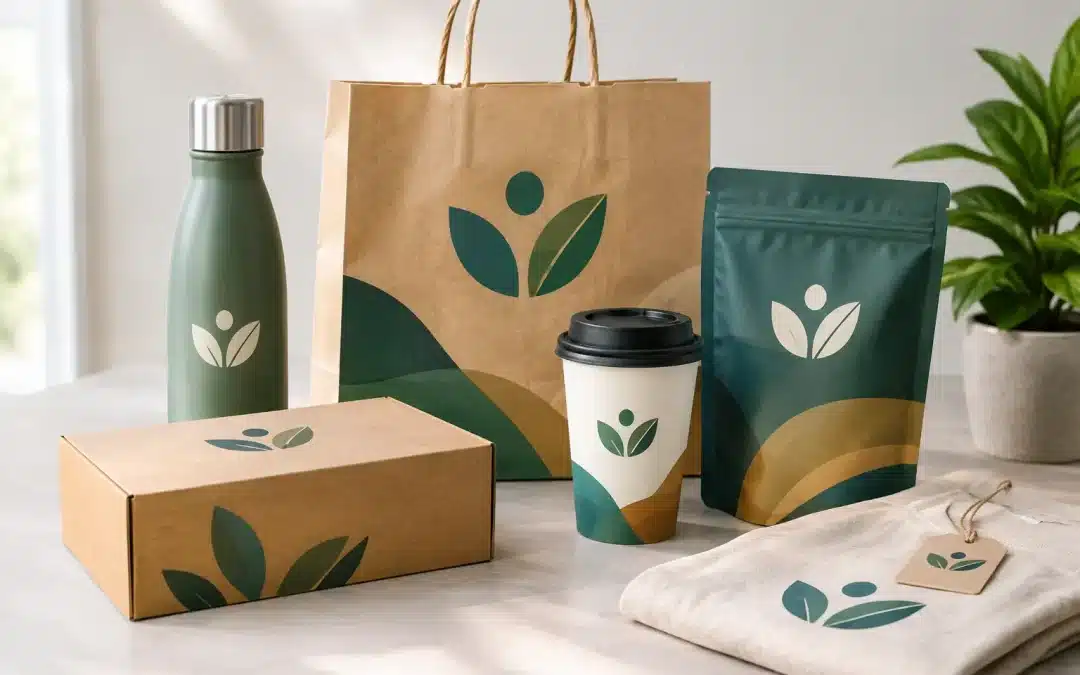
A parcel arriving on a customer’s desk, a takeaway order handed across a counter, or an event gift placed in a delegate’s hands all create the same opportunity: make the brand feel considered before the product is even used. The most useful branded packaging trends are not about adding decoration for its own sake. They are about choosing materials, formats and finishing details that make a business look organised, recognisable and worth remembering.
For Australian businesses, schools, clubs and event organisers, packaging also needs to work in the real world. It must suit the product, protect what is inside, meet the budget and arrive on time. A premium-looking box is not a smart choice if it is oversized, difficult to pack or unsuitable for the delivery method. The strongest packaging decisions balance presentation with practical production detail.
Branded Packaging Trends That Deliver Value
Packaging is becoming part of the product experience
Customers increasingly notice the full handover experience, not just the item they bought or received. A branded mailer, printed tissue paper, sticker seal, product sleeve or carry bag can turn a routine transaction into a more polished brand moment. This is particularly valuable for retailers, hospitality venues, online stores, corporate gifting programs and membership organisations.
The key is consistency. Your logo, brand colours and message should feel connected to your business cards, banners, uniforms, promotional drinkware and other customer-facing materials. Packaging does not need to display every detail of your brand. Often, a clean logo placement and one recognisable colour are more effective than a crowded design.
For clubs and schools, this may mean a simple bag or presentation box for merchandise, awards or welcome packs. For a small business, it may be a branded label and tissue wrap that gives standard product packaging a more intentional finish. The format depends on the occasion, but the aim remains the same: create recognition without making packing unnecessarily complicated.
Recyclable materials are now an expectation
Sustainability is no longer a niche request. Many buyers want packaging that looks professional while reducing unnecessary waste, especially where products are distributed in large numbers at events, conferences or retail counters. Recyclable cardboard, paper bags, paper tape and minimal-ink designs are common choices because they are familiar, functional and easier for recipients to dispose of responsibly.
That said, recyclable is not automatically the best answer in every situation. Delicate goods may need stronger protection, and products exposed to moisture or repeated handling may require a different material. The right approach is to reduce excess where possible, rather than choosing a material that fails to protect the item and creates more waste through damage or replacement.
It is also wise to be precise with environmental claims. A packaging component may be recyclable in some council systems but not others, or it may need to be separated from other materials first. Clear, accurate messaging protects your credibility. If the environmental benefit is important to your campaign, discuss the material specification before finalising artwork and quantities.
Minimal designs are replacing crowded packaging
A clear logo, strong brand colour and a well-chosen finish can do more for packaging than a design packed with text, images and competing messages. Minimal packaging is particularly effective when the brand already has recognisable colours or a distinctive mark. It can look premium, make colour matching easier and remain readable from a distance.
This does not mean every design should be plain. Seasonal promotions, fundraisers, product launches and commemorative events may call for brighter graphics or more detailed artwork. The practical question is whether the design still has a clear focal point. If someone sees the package for two seconds, they should know who it is from.
For best results, provide high-quality logo files and confirm Pantone or CMYK colour requirements early. Colours can look different across cardboard, fabric, plastic and coated paper. A supplier that checks artwork and production methods before printing can help avoid a result that looks close, but not quite right.
Useful packaging earns a longer life
One of the most commercially sensible trends is packaging that has a purpose after the initial handover. Reusable tote bags, zip pouches, sturdy gift boxes, drink bottle sleeves and document folders can become ongoing brand reminders when they are well made and genuinely useful.
This approach works well for staff onboarding, conference packs, school programs, community events and customer gifts. Instead of treating packaging as a short-lived outer layer, organisations can use it as part of the promotional product itself. A branded pouch containing pens, notebooks and lanyards, for example, makes distribution easier and gives recipients something they may reuse.
There is a trade-off. Reusable packaging generally costs more than disposable alternatives, so it should suit a campaign where quality and retention matter. It is less suitable for low-value, high-volume distribution where a simple paper bag or printed sleeve may deliver better value.
Personalisation is moving beyond the logo
Names, team identifiers, event dates and short campaign messages can make packaging feel more relevant than a standard logo print. A charity dinner may use personalised gift boxes for sponsors. A sporting club may create merchandise bags featuring the season or squad name. A business may prepare welcome packs for new staff with a department-specific message.
Variable personalisation can be highly effective, but it requires planning. Each version needs accurate data, approved artwork and a process for checking names, spelling and quantities. For smaller runs, a simple sticker or printed card inserted into standard branded packaging can achieve a personalised feel without the cost and lead time of producing multiple box designs.
The lesson is not to personalise everything. Use it where it strengthens the reason for the item being given. A name on a presentation pack for an award recipient feels appropriate. A different name on thousands of ordinary retail cartons may add cost without adding much value.
Choosing Packaging for the Occasion
Before selecting a style, start with how the packaging will be used. A mailer needs to protect goods in transit. A counter bag needs to be quick for staff to pack. An event pack needs to be easy to carry and distribute. A corporate gift box needs to present several items neatly when opened.
Size is often underestimated. Packaging should fit the contents closely enough to look deliberate and prevent movement, but not so tightly that packing becomes slow or items are damaged. If your branded products include mugs, drinkware, lapel pins, notebooks or scarves, consider how each item will sit inside the package and whether dividers, tissue or protective fill are needed.
Quantity also changes the best option. A one-off executive gift may justify a rigid presentation box and detailed finishing. A run of several thousand giveaway items may be better suited to printed bags, labels or sleeves that keep unit costs under control. Ordering early gives you more material and finishing choices, while tight deadlines can limit what is realistic.
Finishes That Make a Difference
Packaging does not need elaborate decoration to feel high quality. A matte finish can create a modern, understated look. Foil details can suit awards, commemorative items and premium gifts. Embossing or debossing adds texture, while a well-positioned label can bring a simple kraft box into line with a brand identity.
Choose finishes according to how the item will be handled. Fine foil details may not suit packaging that will be rubbed against other cartons during freight. Dark colours can show scuffs more readily than lighter materials. Large areas of solid ink can look striking but may increase cost and highlight scratches. These are not reasons to avoid premium packaging, but they are reasons to match the finish to the journey it must make.
A physical sample is valuable where colour, texture or fit is critical. It gives your team a chance to check whether the logo is legible, whether the packaging feels substantial enough and whether the finished item reflects the standard you want customers to associate with your organisation.
Get Production Details Right Early
The best branded packaging trends still rely on the basics: accurate artwork, suitable print methods, realistic lead times and clear communication. Confirm your final quantities before artwork is approved, allow for packing time at your end, and make sure the delivery date accounts for the event or campaign date rather than simply the day you need stock on site.
It also helps to consolidate related branded items through one experienced supplier. ABC2000 can assist with coordinating branded packaging alongside merchandise, print and display materials, helping organisations maintain a more consistent image across the full campaign.
Good packaging should make your brand easier to recognise and your products easier to present. Start with the recipient, the purpose and the practical conditions, then choose the simplest format that delivers the right impression.