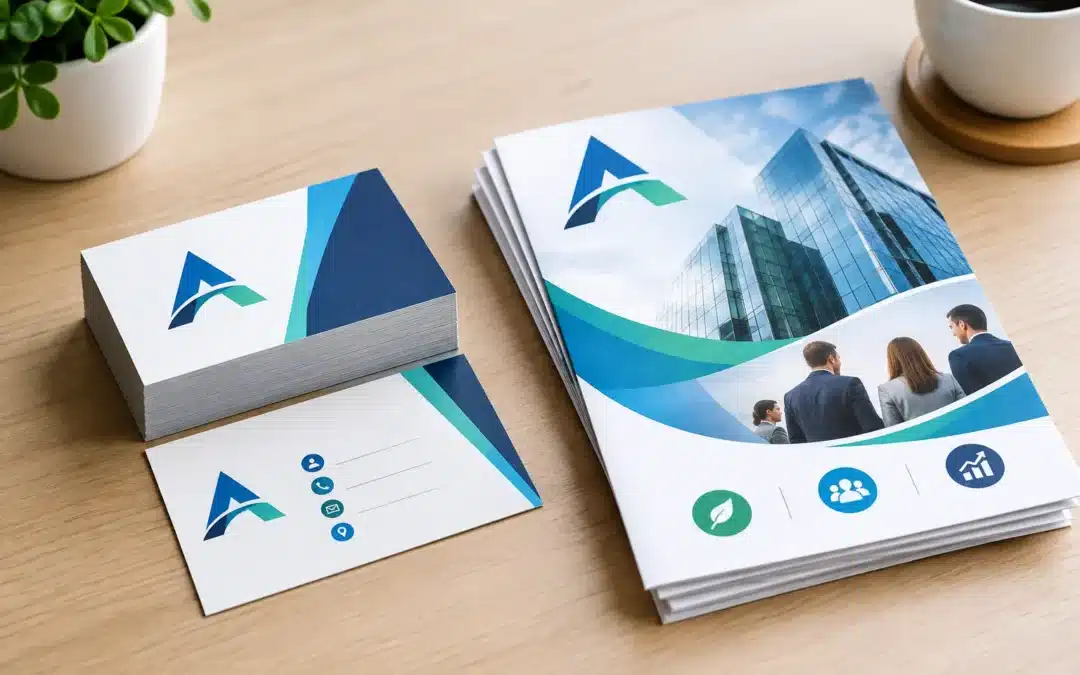
A potential customer has stopped at your trade stand, picked up a sample or asked for a quote. What do you put in their hand? The business cards vs flyers decision is not just about print size or price. It shapes what people remember, what they do next, and whether your brand feels prepared for the occasion.
For many Australian businesses, clubs and event organisers, the best answer is not one or the other. Each printed item has a different job. A business card keeps a personal connection within reach. A flyer gives people a reason to act. Choosing well starts with understanding that difference.
Business cards vs flyers: the core difference
A business card is a compact introduction. It usually carries a name, role, business name, logo and direct contact details. Its strength is credibility. It tells a customer, supplier or new contact that there is a real person behind the brand and an easy way to get back in touch.
A flyer is a promotional message with room to explain more. It can advertise an opening special, event date, service range, product launch, membership drive or fundraising offer. Instead of simply saying who you are, it gives the reader a reason to respond now.
This means the choice depends on the moment. If your goal is to continue a one-to-one conversation after a meeting, use a business card. If your goal is to reach a larger group with a specific offer or announcement, a flyer will generally do more work.
When business cards are the better investment
Business cards remain one of the most useful pieces of printed marketing because they are personal, portable and expected in professional settings. They suit sales calls, networking events, supplier meetings, conferences, property inspections and client appointments. They are also practical for tradespeople, consultants, community organisations and small businesses that receive referrals through word of mouth.
A well-made card can stay in a wallet, handbag, car console or office drawer for months. That matters when a customer may not need your service immediately but wants to find you later. A plumber, accountant, local café, sporting club or cleaning business can benefit from being easy to contact at the exact time the need arises.
The smaller format also encourages a clear message. Include the details people need most: your logo, business name, contact person, phone number, email address and website or social handle where relevant. Avoid crowding both sides with every service you offer. White space, readable type and accurate contact details create a far stronger impression than a card that tries to do too much.
Paper stock and finish affect perception as well. A heavier stock feels considered and reliable, while a clean full-colour design can make brand colours and logos more recognisable. For businesses working in competitive local markets, those details support a professional first impression before the conversation even begins.
When flyers deliver more value
Flyers are built for reach and action. They give you enough space to lead with a headline, show an image, outline key benefits and include a clear call to action. For example, a flyer can promote a school fete, new fitness class, club registration day, seasonal sale, charity raffle or grand opening without making the reader search for the point.
They are particularly effective when the message has a deadline. An early-bird offer, event date, limited-time discount or RSVP request needs more context than a business card can comfortably provide. A flyer lets you explain the value, answer likely questions and tell people precisely how to respond.
Distribution also changes the equation. Flyers can be handed out at community events, included in shopping bags, displayed at reception counters, inserted into local orders or shared through approved community locations. They are useful where people may not speak directly with a staff member but still need enough information to decide whether to make contact.
Good flyer design depends on hierarchy. The most important message should be obvious at a glance. Start with a strong headline, then support it with a short explanation and one clear next step, such as calling, visiting, booking or scanning a QR code. If an offer has conditions, make them easy to understand rather than hiding them in tiny type.
Consider the audience and distribution point
Before ordering print, think about how people will receive it. A business card handed over after a productive conversation has a high chance of being retained because it represents a direct connection. The same card left in a stack at a busy public counter may be overlooked unless the recipient already needs your service.
A flyer can gain attention in a high-foot-traffic setting, but it needs a relevant message. A generic flyer with no clear benefit often becomes paper clutter. A targeted flyer for local residents, event attendees or club members is much more likely to be read because it answers a current need.
For example, a Melbourne-based landscaping business meeting builders and real estate agents may gain more from quality business cards. A family-owned restaurant launching weekday lunch specials may be better served by flyers distributed around nearby offices and community noticeboards. A sporting club recruiting junior players could use flyers to promote registration details, while coaches and committee members keep business cards on hand for sponsor conversations.
Budget, quantity and timing matter
Business cards are usually economical when you need an ongoing supply of professional contact material. Because the message is not tied to one campaign, they can remain useful for a long period – provided your phone number, address and branding do not change.
Flyers can offer excellent value when they support a campaign with a clear purpose and a planned distribution method. However, they are more time-sensitive. If the event date passes, the offer expires or prices change, leftover flyers may no longer be useful. Order quantities should reflect your audience, distribution plan and campaign window rather than simply choosing the largest run.
Artwork preparation is equally important. A logo that looks fine on screen can reproduce poorly if it is low resolution or supplied in the wrong format. Colours may also vary if they are not set up appropriately for print. Working with a supplier that can review artwork, recommend practical stock options and manage production helps avoid expensive reprints or delays close to an event.
Use both when the customer journey needs both
The strongest approach is often to give each format a defined role. At a trade show, for instance, a flyer can promote your product range or show special event pricing. A business card can then be handed to qualified leads who want to speak with a specific team member afterwards.
At a local open day, flyers can direct visitors to demonstrations, booking details or a prize draw, while business cards help staff continue conversations with suppliers, sponsors and prospective partners. The same principle works for schools, associations and charities: use flyers for the public message and business cards for relationship building.
Consistency is essential when combining formats. Use the same logo treatment, colours, type style and tone of voice so every printed piece looks like it comes from the same organisation. A flyer should not feel like a separate campaign from the business card in a customer’s pocket. Brand consistency builds recognition, especially when people encounter your organisation more than once.
Make the next action easy
Whether you choose business cards, flyers or both, the most effective print is practical. Check every phone number, email address, spelling and event detail before approval. Make sure key text is large enough to read comfortably. If you use a QR code, test it on different mobiles and make sure it leads to a page that matches the printed message.
For organisations managing multiple activities, it can also help to plan printed materials together. Business cards, event flyers, banners, branded pens and other promotional items work harder when they present a consistent image. ABC2000 can assist with the production detail, helping you select printed products that suit the occasion, brand and delivery deadline.
A business card keeps the door open after a conversation. A flyer gives people a reason to walk through it. Start with the action you want people to take, then choose the format that makes that action easiest.