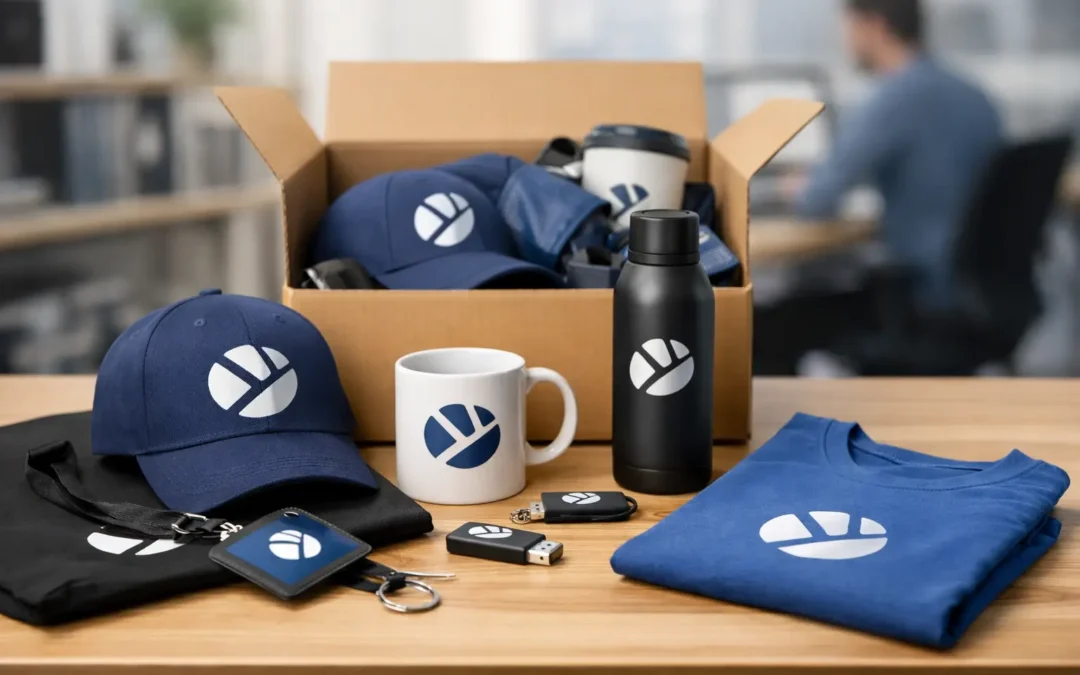
A branded pen handed out at a trade show, a quality drink bottle used at work, or a scarf worn by club supporters can keep your organisation visible long after the first interaction. Knowing how to order branded merchandise properly helps you avoid the common problems that cost time and money: unsuitable products, unclear artwork, missed event dates and disappointing print quality.
The best results come from treating promotional products as part of your wider brand presentation, not as a last-minute giveaway. Start with a clear purpose, allow enough production time and work with a supplier that can guide the details from product selection through to delivery.
Start with the purpose, audience and occasion
Before choosing a product, decide what it needs to achieve. A compact promotional pen may suit a conference registration desk, while insulated drinkware can provide more lasting value for staff recognition or client gifts. Branded lanyards, badges and banners are practical choices for events, whereas beanies, scarves and patches can build strong identity for sporting clubs and community groups.
The recipient matters as much as the product. Consider whether the item will be used once, taken home, worn regularly or displayed in a workplace. A useful item with a clear logo earns more repeat exposure than something that feels unrelated to its audience.
It also helps to define the setting. Ask where the merchandise will be seen and used. For example, products for an outdoor fundraising day need to cope with handling, weather and transport. Merchandise for a corporate event may need a more polished finish and restrained branding. There is no single best promotional product – the right choice depends on the audience, the budget and the job it needs to do.
Set quantities and budget early
Quantity affects both unit cost and production options. Ordering more of one item often reduces the cost per unit, but only if you can use or store the stock. A small business preparing for a local expo may be better served by a modest run of well-chosen merchandise than thousands of low-value items that sit in a storeroom.
When setting a budget, include more than the base product price. Customisation method, number of print colours, print positions, individual packaging, artwork preparation and delivery can all influence the final figure. Ask for a clear quote based on the exact quantity and branding required so you can compare options properly.
A useful approach is to nominate a preferred product and a practical alternative. If a premium travel mug does not fit the budget, a quality reusable cup or branded aluminium coaster may still deliver a useful, memorable result. This keeps the conversation focused on value rather than simply choosing the cheapest item.
Choose a product that carries your brand well
Your logo needs an appropriate space and decoration method. A detailed logo may reproduce well on a notebook cover, tote bag or banner but lose clarity on a very small keyring. Fine text, gradients and intricate artwork can be difficult to reproduce on certain surfaces, particularly where the print area is limited.
Think about the product material too. Plastic pens, ceramic mugs, metal drinkware, fabric apparel and stitched patches each require different branding processes. Screen printing, pad printing, embroidery, engraving, digital printing and transfer decoration all have strengths and limitations. Engraving, for instance, can create a durable premium look on metal, while full-colour digital printing may better suit artwork with photographic detail.
Quality should match how long the item is expected to remain in use. For an important client gift or staff milestone, a better-quality product usually reflects well on your organisation. For a high-volume community event, affordability and practical distribution may matter more. Both are valid choices when they are made deliberately.
Prepare artwork before placing the order
Good artwork is the foundation of good branded merchandise. Supply your logo in the highest-quality format available, preferably a vector file such as AI, EPS or PDF. Vector artwork remains sharp when scaled and generally gives the production team more flexibility than a low-resolution image copied from a website or email signature.
Include the correct brand colours, ideally as Pantone references where colour matching is important. Colours can appear different across materials and decoration methods, so an exact match is not always possible. A supplier should explain any likely variation before production, particularly for logos with distinctive corporate colours.
If you do not have suitable files, ask about artwork assistance before committing to the product. Recreating or cleaning up a logo may be necessary, and it is better to resolve this at the quotation stage than after an urgent order has been approved. Check spelling, phone numbers, web addresses and event dates carefully as well. Once custom production begins, changes may not be possible.
Approve the proof carefully
A digital proof is your opportunity to check how the finished item is expected to look. Review the logo size, position, colours, wording and orientation. On drinkware or apparel, confirm which side will face the user. On banners and signage, check viewing distance and whether essential information can be read quickly.
Do not rush proof approval to save a day if there is uncertainty. The cost of correcting a mistake after production is far greater than the time spent checking a proof with a second pair of eyes.
Allow for production and delivery time
Deadline pressure is one of the biggest causes of compromise when ordering custom merchandise. Production times vary according to the item, decoration process, stock availability, order size and season. Some standard products may be produced quickly, while embroidered clothing, custom-made pins, speciality items and large event orders can require more lead time.
Work backwards from the date you need the goods in hand, not the event date. Allow time for freight, checking the delivery, packing event kits and distributing items to branches, team members or volunteers. If your event is in Melbourne but stock needs to reach regional Victoria, build in extra margin rather than relying on a tight delivery window.
Peak periods can also affect timing. End-of-year functions, school events, sporting finals and major conferences often create heavier demand. Ordering early gives you a wider product selection and more room to make decisions without resorting to an inferior substitute.
Give your supplier a complete brief
A complete enquiry speeds up the process and produces a more accurate recommendation. Include the product type or intended use, quantity, logo files, preferred colours, branding positions, delivery suburb and required date. If you are unsure about the item itself, explain the audience and occasion instead. An experienced supplier can suggest suitable options across products rather than forcing a one-size-fits-all choice.
It is also worth being upfront about non-negotiables. You may need a particular item to meet a club colour scheme, fit within a set event budget or arrive before a launch date. Clear priorities make it easier to identify where there is flexibility – perhaps in the decoration method, packaging or product range – without compromising the result.
For organisations managing several elements at once, using one supplier for merchandise, printed materials and displays can reduce administrative work and help maintain brand consistency. ABC2000 supports this process with product sourcing, artwork guidance and coordinated production across a broad range of promotional and display products.
Check the order details before production
Before giving final approval, confirm the quotation against your original brief. Check quantities, product colours, decoration details, setup charges, artwork requirements, delivery address and expected delivery date. If the merchandise is for multiple locations, clarify whether the goods are being delivered in one shipment or divided between sites.
For larger orders, ask whether a pre-production sample is available or appropriate. It may add time and cost, but it can be worthwhile for a new product, a complex design or a high-profile campaign. A sample is especially useful when fabric colour, embroidery placement or print finish needs to meet a particular expectation.
Keep one person responsible for final approvals where possible. Too many last-minute changes from different stakeholders can delay production and create confusion. A clear sign-off process protects both your budget and your deadline.
Plan distribution so the merchandise gets used
Ordering is only half the job. Think about how the merchandise will reach people and what will encourage them to keep it. Staff packs can be prepared before a company event. A giveaway at a stand needs to be easy to carry and quick to hand over. Club merchandise should be available when supporters are most engaged, such as at registration days, home games or presentation nights.
If an item has a higher perceived value, consider using it as part of a membership offer, customer thank-you or competition rather than placing it in a general giveaway pile. This can make a limited quantity work harder and gives the product a clearer connection to your organisation.
A well-planned order does more than put a logo on an object. It gives people a practical reminder of your business, event or club, delivered at the right moment and made to a standard you are happy to be associated with. Start the conversation early, provide a clear brief and leave enough room for careful proofing – your branded merchandise will have a much better chance of being kept, used and remembered.