
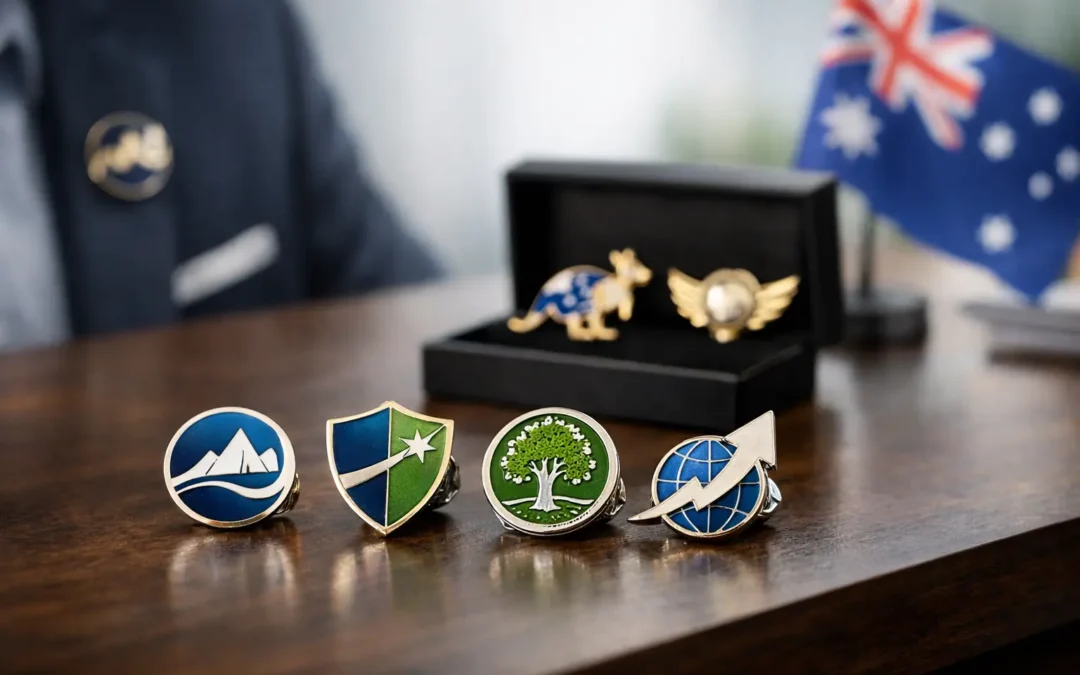
A lapel pin may be small, but it is often noticed at close range – across a reception desk, at a conference registration table, during a school presentation or on the sidelines of a club event. Buyers looking for custom lapel pins Australia can rely on need more than a logo placed on metal. They need a pin that represents their organisation clearly, suits the occasion and arrives ready for use.
For businesses, associations, schools and community groups, lapel pins are a practical way to build recognition. They are durable, easy to distribute and formal enough for occasions where a pen or keyring may not feel quite right. The best result comes from matching the pin style, finish and attachment to its purpose before production begins.
Why custom lapel pins still make an impact
Lapel pins carry a sense of occasion. A staff member wearing a branded pin looks identifiable and professional. A volunteer pin helps people quickly find the right person at a busy event. A commemorative design gives members, donors or attendees something tangible to keep after the day is over.
They also work across a wide range of uses. Corporate teams can use them for employee recognition, branded uniforms and milestone celebrations. Clubs and associations can create membership pins, fundraising pins and anniversary pieces. Schools may choose pins for leadership roles, sporting achievements or graduation. Event organisers can use them for sponsors, speakers, crew and VIP guests.
Unlike disposable promotional items, a quality metal pin can stay in circulation for years. That makes the design worth considering carefully. A generic design may meet the immediate need, but a well-finished pin becomes part of an organisation’s identity.
Choosing the right custom lapel pin style
The right style depends on your artwork, budget, quantity and the impression you want to make. There is no single best option for every project. A simple logo with bold colour fields may suit soft enamel perfectly, while a detailed commemorative design may need a more refined finish.
Soft enamel pins
Soft enamel is one of the most popular choices for colourful logo pins. The coloured enamel sits slightly below the raised metal lines, creating texture that can be felt with a fingertip. It delivers a crisp, traditional pin look and is a good option for clubs, schools, events and branded merchandise.
This style works especially well when the design has defined borders between colours. Fine text can be possible, but only where the pin size allows it. Trying to fit a full slogan into a very small pin can make the finished result difficult to read.
Hard enamel pins
Hard enamel has a smooth, polished face, with the colour filled level with the metal lines. It has a premium appearance and is often selected for corporate recognition, executive gifts, anniversary pins and high-value membership items.
The trade-off is usually cost. Hard enamel can be a stronger choice where presentation matters most, but soft enamel may offer better value for a larger giveaway or volunteer program. The intended audience and quantity should guide that decision.
Die-struck and antique finishes
A die-struck pin uses the metal itself as the feature, rather than relying on coloured enamel. It can be finished in gold, silver, bronze, black nickel or an antique effect that highlights raised and recessed detail. This approach is ideal for heritage organisations, commemorative items, service awards and designs with a crest or emblem.
Without colour, the design needs enough contrast in the metal detail to remain clear. It is a strong option for a classic look, but it may not be the best fit for a bright, colour-led brand.
Printed pins for detailed artwork
When a design includes gradients, photographs, fine shading or multiple small details, a printed pin may be the practical solution. The artwork is printed onto the pin face and commonly protected with a clear coating. This gives greater flexibility for detailed imagery than enamel allows.
Printed pins can reproduce more complex artwork, although they do not have the raised-metal texture of enamel styles. If your logo contains subtle tonal changes or very fine elements, it is worth discussing whether printed production will provide a clearer outcome.
Start with artwork that will work at pin size
A lapel pin is not a business card. Artwork that looks excellent on a screen or banner can lose definition when reduced to a small metal shape. Strong pin designs favour simple forms, readable lettering and clear spaces between colours.
Your logo may need minor adjustment for production. That does not mean changing the brand identity. It may mean removing a tiny tagline, thickening a line or simplifying a complex section so the finished pin stays sharp. A reliable supplier should explain these production considerations before proceeding, rather than leaving you to discover them when the order arrives.
Vector artwork is generally preferred because it can be resized cleanly. If you only have a JPEG, PNG or scanned logo, it may still be possible to assist, but the quality of the original file affects what can be reproduced. Supplying approved brand colours and any relevant style guidelines also helps keep the result consistent with your other promotional material.
Consider size, shape and backing together
Most lapel pins are designed to sit neatly on a jacket, polo, lanyard or uniform. A compact size is easy to wear, but it limits how much detail can be included. Larger pins allow more room for text and artwork, yet can feel less discreet. For everyday staff or member use, a modest size often provides the best balance.
A custom shape can make a pin more distinctive. It may follow the outline of a logo, mascot, product or local landmark. Standard round, square and shield shapes can be more economical and work well for formal badges, membership pins and simple marks. The most suitable option depends on whether recognition, brand personality or budget is the priority.
Backing is equally practical. Butterfly clutches are common and convenient for most applications. A rubber clutch may suit active environments, while a magnet backing can be useful where avoiding a pin hole in clothing is important. Longer-term wear, fabric type and safety requirements should all be considered before selecting the attachment.
Quantities, budgets and lead times need early attention
Custom pins are normally made to order, so production time needs to be built into the project plan. The exact timing will depend on the pin style, artwork complexity, quantity and any finishing requirements. If pins are needed for an annual presentation, product launch or conference, start the discussion well before the event date.
Quantity also affects unit cost. Ordering more pins generally reduces the cost per piece, which can make sense for ongoing staff use, membership packs or future events. However, ordering far more than you can realistically distribute can tie up budget and storage space. It is better to estimate expected demand, include a sensible contingency and choose a quantity that fits your actual program.
Ask for clarity on what is included in the quote: pin size, finish, colours, backing, packaging, artwork preparation and delivery timing. A low starting price may not reflect the same specification as a finished, ready-to-hand-out pin. Comparing like for like helps avoid surprises.
Make the pin part of a wider branded program
Lapel pins are most effective when they support the rest of your organisation’s presentation. A staff recognition pin can sit alongside branded name badges, lanyards, uniforms and certificates. An event pin can be packaged with a tote bag, notebook, drink bottle or sponsor merchandise. For a club anniversary, a pin may complement scarves, patches, banners and commemorative items.
Working with one experienced supplier can make this easier to coordinate. ABC2000 helps organisations manage branded merchandise projects across multiple products, with support on artwork, product selection and production details. This is particularly useful when a launch or event has several moving parts and a fixed delivery date.
Before approving your order, check the artwork proof closely. Confirm spelling, colours, pin shape, metal finish and attachment type. It only takes a few minutes, and it is the point where small changes are easiest to make.
A well-planned lapel pin gives people a simple reason to wear your name, mark an achievement or feel part of a group. Start with the occasion and the people who will wear it, then choose the finish and detail level that will make the pin feel worth keeping.