
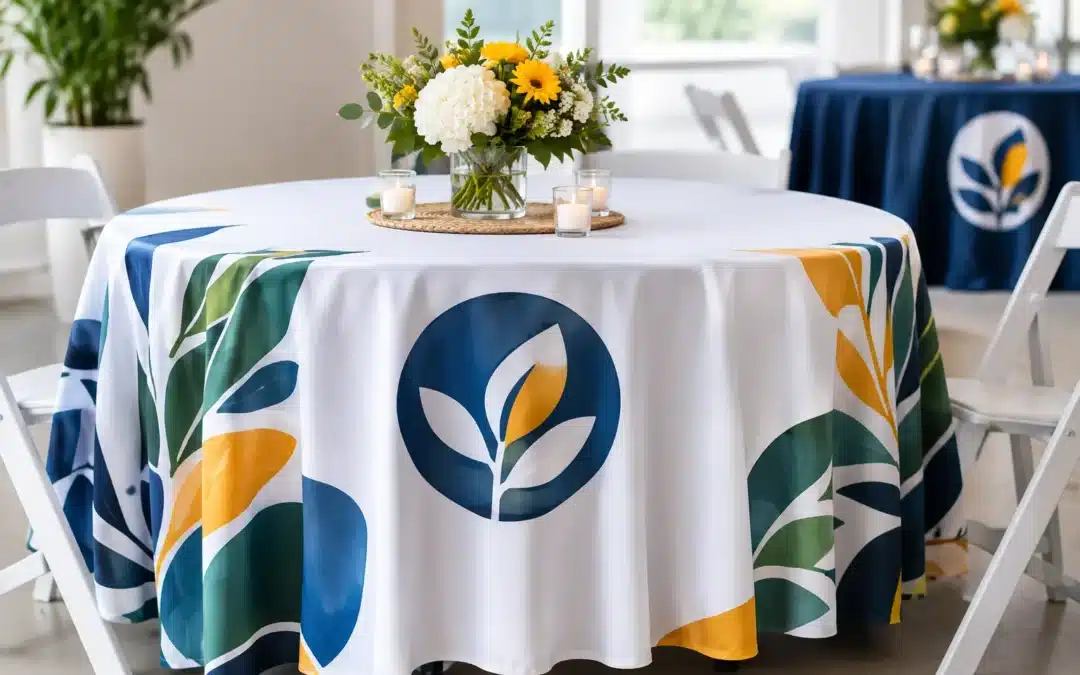
A trestle table can either look like temporary furniture or a properly branded display point. The difference is usually the tablecloth. This printed tablecloth buying guide is designed for Australian businesses, clubs, schools and event organisers who need their logo to look sharp, fit the occasion and arrive ready for use.
A printed cloth is more than a table covering. At an expo, market, registration desk, school fete or club presentation night, it gives people an immediate visual cue about who they are dealing with. It also hides cartons, stock and cables stored beneath the table, keeping the space more professional without requiring a large display budget.
Start with where and how the tablecloth will be used
The right choice depends on the job. A lightweight fitted cloth that works well for an indoor trade show may not be the best option for a community event on an oval, where wind, dust and repeated handling are part of the day.
For a one-off promotion, a simple branded runner over an existing plain cloth can be a cost-effective choice. It provides a clear logo area while keeping the order quantity and setup requirements modest. For regular events, a full printed tablecloth delivers stronger brand presence and makes every table look consistent, even when the venue furniture changes.
Think about the practical environment before selecting a style. Ask whether staff will sit behind the table, whether you need access to storage underneath, and whether the table will be viewed from the front only or from all sides. A fitted cloth may look neatest, while a loose drape can be more forgiving if table sizes vary slightly.
Outdoor use deserves extra planning. A cloth can catch the breeze, so use clips, weights or a style that fits securely around the table. Darker colours are generally more forgiving with dust and scuff marks, while a white background can look excellent indoors but may need more careful handling at busy public events.
Choose the right size and shape first
A great design cannot compensate for a tablecloth that is too short, too narrow or poorly matched to the table. Measure the actual tables you will use whenever possible. Do not rely on a venue description alone, as a “standard trestle table” can differ in length, width and height.
For rectangular tables, record the length, width and height. For round tables, measure the diameter and height. These dimensions determine both the fabric size and how far the cloth will drop on each side.
A full drop tablecloth extends close to the floor, creating a polished appearance and concealing stored items underneath. It suits exhibition stands, information desks, catering stations and formal functions. A mid-drop style is easier to manage where staff need to sit comfortably or where the table will be moved frequently.
Fitted or stretch tablecloths are shaped to hug the table legs and corners. They are popular for displays because they remain tidy throughout the day and reduce loose fabric around foot traffic. The trade-off is that they need to be made for the correct table dimensions. If your organisation uses different tables at different venues, a standard draped cloth may offer more flexibility.
Printed tablecloth buying guide: fabric and finish
Most promotional tablecloths use polyester because it is practical, durable and suitable for vibrant full-colour printing. It is also relatively easy to transport, wash and reuse. For organisations attending several events each year, that repeat value matters more than saving a small amount on the first order.
The fabric weight and weave influence how the cloth hangs, how opaque it appears and how premium it feels. A thin fabric may be appropriate for a short campaign or a tight budget, but it can show the outline of boxes beneath the table or look less substantial under bright venue lighting. A heavier fabric usually drapes better and provides a more considered finish.
Wrinkle resistance is another worthwhile consideration. No tablecloth is completely crease-proof after being packed in a vehicle or courier carton, but polyester blends generally recover well when unfolded early or lightly steamed. If your team is setting up in a hurry, choose a fabric that looks presentable without demanding extensive preparation.
Also ask how the cloth will be finished around the edges. Neat hemming gives a professional result and helps the product hold up after repeated use. For fitted styles, reinforced stitching at stress points is particularly useful, especially where staff regularly pull the cloth on and off tables.
Make the artwork work at table height
A logo that looks excellent on a computer screen can become difficult to read when it sits on the front of a table, partly blocked by people, brochures or product samples. Tablecloth artwork needs to be designed for the way people will actually see it: from several metres away, often while walking past.
Keep the main message simple. Your logo, business name, key service line or event identity should be the priority. Avoid filling every available panel with small text, phone numbers and detailed graphics. A tablecloth has a large print area, but that does not mean every centimetre needs content.
The front panel is normally the strongest position for branding because it faces visitors. If customers may approach from multiple directions, consider printing on the side panels or all over the cloth. This can be useful for island displays, market stalls and open-plan events, though it will affect the overall cost.
High-resolution artwork is essential. Vector files such as AI, EPS or print-ready PDF files usually give the cleanest logo edges because they can be scaled without losing quality. A high-resolution PNG may also be suitable for some designs. Low-quality web images and screenshots often produce soft, pixelated results when enlarged across fabric.
Colour matching should be discussed before production, particularly if your branding uses specific corporate colours. Fabric printing can look different to print on paper, signage or a computer monitor. An experienced supplier can advise on artwork setup and practical colour expectations, helping avoid surprises when the finished cloth arrives.
Select the printing method for the design, not just the price
Full-colour dye-sublimation printing is a common choice for polyester tablecloths. The colour is transferred into the fabric rather than sitting heavily on top, allowing detailed graphics, gradients and photographic elements to reproduce well. It is a strong option for full-coverage designs and logos with several colours.
For simpler designs, other printing approaches may be available depending on the fabric, order quantity and required finish. The best option is not always the cheapest per unit. Consider whether the design includes fine detail, whether you need colours across the entire cloth, and how often the product will be washed and reused.
A useful rule is to invest in readability before extra decoration. A clear logo on a well-made cloth will usually work harder than a busy design that is difficult to understand at a glance.
Plan quantities, lead times and event deadlines
Custom production takes planning. Your timeline should allow for artwork approval, proofing, production, freight and a small buffer before the event date. Leaving everything until the final week can limit fabric and finishing options, create unnecessary pressure and increase the risk of missing a deadline.
Order enough tablecloths for the way your team operates. One cloth may cover a single display table, but two or three can be sensible for organisations that attend concurrent events, run multiple registration points or want a backup while one is being cleaned. Schools and clubs should also consider whether different programs or teams need their own branding.
Before approving the order, confirm the finished size, print locations, cloth style, artwork version, colours and delivery date. These details are straightforward, but catching an error before production is far easier than correcting it afterwards.
Care for a tablecloth that will be used again
A branded tablecloth should be treated as reusable display equipment, not disposable event material. Shake out loose dirt after use, follow the supplied washing instructions and avoid harsh bleach or high heat unless the fabric guidance specifically permits it. Folding the cloth cleanly once dry will make setup quicker next time.
Store it in a labelled bag or container with relevant display accessories such as clips, banners and counter signs. That small amount of organisation helps volunteers and staff arrive at an event prepared, rather than searching for a missing cloth ten minutes before doors open.
ABC2000 can help turn your table size, artwork and event requirements into a practical branded solution, with guidance on materials, print coverage and production details. The best printed tablecloth is the one your team can set up confidently, use repeatedly and trust to represent your organisation well wherever the next event takes you.