A polo shirt for a customer-facing team needs to look sharp after months of washing. A run shirt for a charity event needs bright sponsor logos that will not crack or peel at the finish line. Both may carry the same artwork, but embroidery versus sublimation produces very different results. Choosing the right method early helps protect your budget, delivery schedule and, most importantly, the way your brand is seen.
For Australian businesses, clubs, schools and event organisers, there is no single winner. The right decoration method depends on the garment, the design, how it will be worn and the impression you want it to make. Embroidery gives a raised, premium finish that suits many uniforms and corporate garments. Sublimation creates detailed, full-colour prints that become part of suitable fabric. Understanding the practical differences makes ordering branded apparel far more straightforward.
Embroidery versus sublimation at a glance
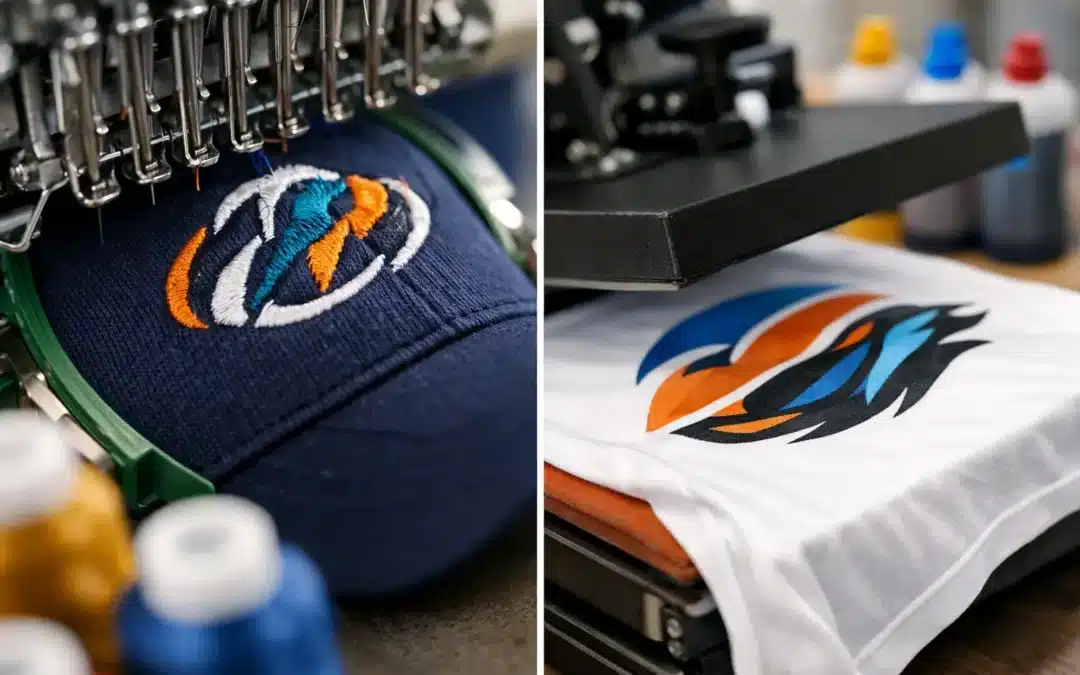
Embroidery applies thread directly to the garment using a digitised version of your logo. It has texture, dimension and a traditional professional appearance. It is particularly common on polos, work shirts, caps, jackets, beanies, towels and corporate uniforms.
Sublimation is a printing process that uses heat to transfer dye into polyester fabric. Rather than sitting on top of the garment, the ink bonds into the fibres. The result is smooth to the touch, lightweight and capable of reproducing detailed artwork, gradients, photographs and all-over designs.
The decision is not simply about whether one looks better. Embroidery and sublimation suit different jobs. A small chest logo on a durable work polo and a full-front design on a sporting singlet have different production requirements and different expectations from the wearer.
When embroidery is the stronger choice
Embroidery is often selected when a business wants a smart, established look. The stitched finish gives logos presence, particularly on garments with enough weight to support the thread. It is an excellent option for reception teams, hospitality staff, trade uniforms, school apparel, club jackets and branded headwear.
A premium finish for everyday uniforms
A well-produced embroidered logo can withstand frequent washing and regular wear. The thread retains its colour well, and the raised finish makes a simple logo feel considered rather than disposable. For teams meeting customers on site, in a showroom or at an event, this can reinforce confidence in the business.
Embroidery also performs well on materials where sublimation is not available, including cotton polos, fleece, many workwear fabrics, caps and beanies. If your team needs warm layers for an early Melbourne start or durable work shirts for day-to-day use, embroidery is usually the more practical route.
Best for simple, bold artwork
Clear logos with solid colours, readable lettering and strong shapes translate very well into stitches. A compact left-chest logo, sleeve emblem or name detail is a familiar and effective application.
There are limits, however. Very small text may lose clarity when converted to thread. Fine lines, tiny gaps and intricate details can fill in or become difficult to read. Embroidery also cannot reproduce photographic detail or subtle colour fades in the way print can. Artwork may need minor adjustment so the finished logo is clean and recognisable.
Points to consider with embroidery
Thread adds weight and can feel firmer on lightweight garments. This is rarely an issue on polos, jackets or caps, but it can be less comfortable on thin activewear. Large embroidered designs also take longer to produce and use more stitches, which can increase cost.
The number of thread colours, stitch count and design size all affect pricing. This does not make embroidery unsuitable for larger orders, but it does mean the artwork should be reviewed before a quote is finalised. A capable supplier will advise if a design is too detailed, too large or better suited to another decoration method.
When sublimation is the stronger choice
Sublimation is made for colour, movement and detail. It is a popular option for sporting apparel, event shirts, cycling jerseys, running singlets, fishing shirts, teamwear and promotional garments where the artwork needs to cover a large area.
Full-colour artwork without the heavy feel
Because the dye becomes part of the fabric, sublimated designs do not have a raised surface. The print will not crack, peel or create the stiff panel sometimes associated with other garment printing methods. That matters for active garments, where breathability and comfort are part of the product’s performance.
Sponsor logos, player names, numbers, patterns and bright team colours can all be incorporated into one design. It is especially useful when several logos are required across the front, back and sleeves. For a fun run, school house event or community sports club, sublimation can make a busy design look intentional rather than crowded.
Ideal for detailed designs and colour variation
Sublimation handles gradients, fine type, illustrations and photographic elements exceptionally well. It can also reproduce a wide range of colours without charging separately for each colour in the artwork. This gives organisers more creative freedom when building event merchandise or a distinctive team identity.
For designs printed all over a garment, sublimation is usually applied to fabric panels before the garment is sewn together. This creates a cleaner result than trying to decorate a finished shirt around seams and side panels. It also allows patterns and colours to flow across the garment.
Fabric matters more than many buyers expect
Sublimation works best on white or very light polyester garments with a high polyester content. It is not a solution for cotton garments, and it cannot produce bright artwork on dark fabric in the same way. The garment itself is therefore a major part of the decision.
This can be a benefit for sporting and outdoor apparel because polyester is lightweight, quick-drying and commonly used for performance clothing. But if your preferred uniform is a cotton-rich polo, a canvas cap or a fleece jacket, embroidery may be the better fit.
Cost, quantities and lead times
The most economical choice changes with the job. Embroidery has an initial setup process to digitise the logo into stitches. Once created, that file can generally be used again for repeat orders of the same design. Costs then depend largely on stitch count, placement and quantity.
Sublimation can be cost-effective for full-colour apparel, especially where the artwork is complex or covers large areas. There is no need to simplify a detailed design into a small number of thread colours. However, sublimated garments are often purpose-made or selected from specific polyester ranges, which can affect minimum quantities and production timing.
The cheapest option on paper is not always the best value. A short-term event shirt may need bold full-colour impact at a sensible price. A staff uniform may need years of repeated laundering and a more formal appearance. Match the method to the life of the garment, not just the first invoice.
If you have a fixed event date, allow time for artwork approval, garment selection, decoration and delivery. Providing a clean logo file, final sizes and confirmed quantities early reduces delays. It also gives your supplier time to flag any issues with fine detail, thread colours or fabric compatibility before production begins.
Choosing the right method for your garment
Start with how the item will be used. Embroidery suits a professional uniform, a cap, a jacket or a polo that needs a durable logo in one or two positions. Sublimation suits performance apparel, event merchandise and designs where colour and coverage are central to the look.
Then examine the logo itself. If it is simple, bold and intended to sit neatly on the chest, embroidery is often a strong choice. If it includes gradients, many colours, small details, sponsor artwork or a large graphic, sublimation is likely to show it more accurately.
Finally, consider the garment fabric and your audience. A corporate office team may value the texture and polish of embroidery. A junior football club may need lightweight shirts with individual names, numbers and sponsor marks. A trades business may require hard-wearing workwear that can take an embroidered logo and regular washing.
Get practical advice before production
A good branded garment starts with more than a logo file. It needs the right fabric, decoration method, placement and production plan. At ABC2000, the focus is on helping customers match the product and branding method to the purpose, whether that is a staff uniform, club apparel, a school event or a promotional campaign.
Send through your artwork, preferred garment style, quantity and required date. With the right advice at the start, your finished apparel can look professional, wear well and keep representing your organisation long after the event has finished.