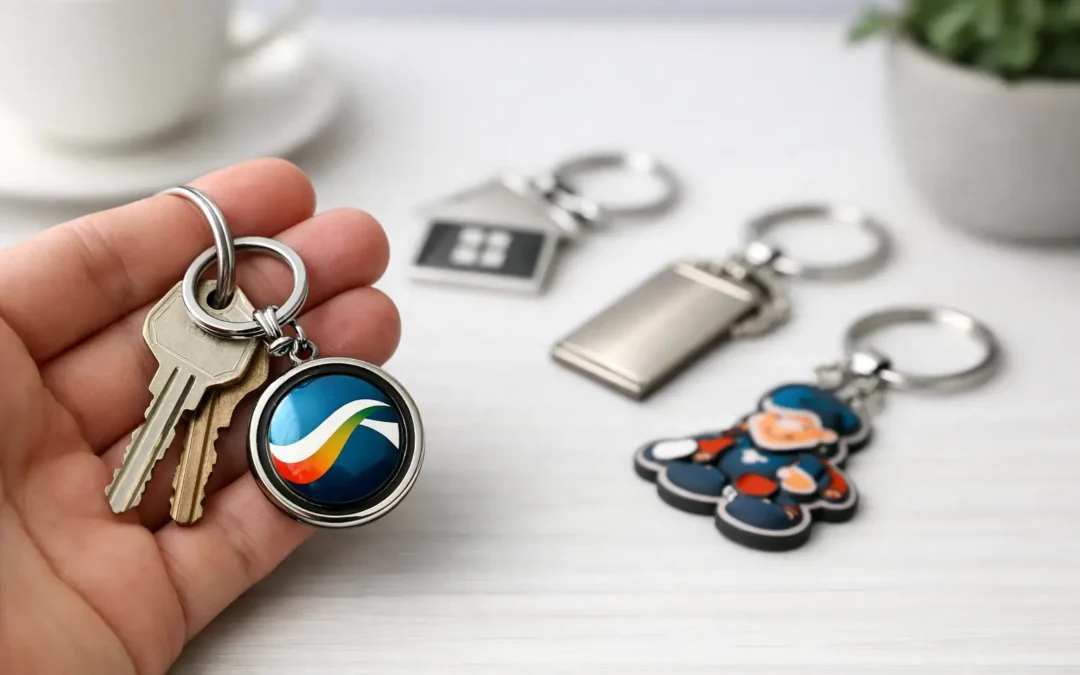
A keyring is one of the few promotional products that earns a place in someone’s pocket, bag or car every day. Well-chosen custom keyrings with logo keep your business visible long after an event has packed up or a sales meeting has finished. The challenge is choosing a design people will actually keep, rather than another giveaway that disappears into a drawer.
For Australian businesses, clubs, schools and event organisers, the best keyring is usually not the flashiest option. It is the one that suits the audience, carries the logo clearly and feels useful in the hand. Material, shape, branding method and quantity all affect that result.
Why keyrings remain a practical promotional choice
Promotional products work hardest when they become part of a routine. Keys are used repeatedly, whether someone is opening the office, starting the ute, accessing a gym locker or arriving home after work. A branded keyring travels with the recipient and creates frequent, low-pressure exposure for your organisation.
That makes keyrings particularly effective for businesses that rely on local recognition. Real estate agencies can add them to settlement packs. Trades and service businesses can leave them with completed jobs. Automotive firms, accommodation providers, schools, sporting clubs and community groups can use them for memberships, fundraising and events. They are also a sensible inclusion in staff welcome packs, customer thank-you bundles and product launches.
The value is not simply in giving away a cheap item. It comes from matching the product to a useful purpose and presenting your logo professionally. A clear brand mark on a durable keyring can support recognition for months or years.
Choosing custom keyrings with logo for the right audience
Start with where and how the keyring will be used. This decision should guide the material and style before you settle on colours or artwork.
A classic metal keyring has a premium, long-lasting feel and suits corporate gifts, automotive businesses, property settlement packs and recognition programs. It works well where you want the item to reflect quality, although the available branding area can be smaller and fine artwork may need simplifying.
Plastic keyrings are versatile, affordable and available in a broad range of colours and shapes. They are often a practical choice for large events, schools, promotions and club membership drives. If your brand has strong colours or a playful character, plastic can provide more visual flexibility than metal.
Soft PVC keyrings are ideal when the shape itself can tell part of the story. A café may choose a miniature coffee cup, a construction business might use a hard hat shape, or a sporting club could create a mascot design. They are memorable, tactile and suitable for bold logos, but custom moulded options generally require more planning and may have higher minimum quantities.
Leather-look and stitched keyrings suit hospitality, professional services and premium customer gifts. They create a more refined impression, particularly when paired with debossing or a subtle printed logo. The trade-off is that fine colour reproduction may be limited compared with full-colour printed products.
There is no single best option. A budget-conscious charity fun run may benefit from bright, lightweight plastic keyrings, while a vehicle dealership handing over keys to a new owner may be better served by metal or leather-look styles.
Make the logo easy to recognise
A small product needs disciplined artwork. The logo should be visible at a glance, not crammed into every available millimetre. If your full logo includes a detailed illustration, a long tagline and several colours, consider using a simplified version for the keyring.
Solid colours, bold lines and readable type generally produce the strongest result. For small branding areas, a logo mark, initials or short business name can work better than a complete lock-up. Your phone number or website may be useful on some promotional products, but it is not always necessary on a keyring if it makes the design difficult to read.
Colour matching also matters. A close approximation may be acceptable for a low-cost event giveaway, while an established brand with strict guidelines may need a more precise production method. Supplying clean vector artwork where possible gives the production team the best starting point for sharp printing, engraving or moulding.
Before approving production, check the proof for spelling, logo placement, scale and contrast. This small step prevents costly disappointment, especially when ordering for a major event or campaign deadline.
Select a branding method that suits the product
Printing is often the most flexible option for colourful logos and straightforward designs. Pad printing suits many plastic and shaped keyrings, while digital printing can be useful for detailed, full-colour artwork where the product allows it.
Laser engraving is popular on metal because it creates a clean, permanent finish that will not rub away like surface printing can over time. It delivers a professional, understated look, though the result is generally tonal rather than full colour.
Debossing presses the design into leather or leather-look materials. It has a premium finish and works particularly well with simple logos. For PVC keyrings, the branding and shape can be built into the mould itself, giving a raised or recessed design with strong visual impact.
The best method depends on the desired finish, artwork complexity, order quantity and budget. A hands-on supplier can explain what will reproduce well before you commit to an option that looks good only on screen.
Think beyond the giveaway table
Keyrings are often ordered for exhibitions and open days, but they can do more when they are part of a wider campaign. Pair them with branded pens, notebooks, lanyards or drinkware to create a coordinated pack for new staff, club members or event attendees. Consistent colours and logo treatment make even modest promotional items feel considered.
They are also useful as functional identifiers. Coloured keyrings can help manage keys for holiday accommodation, fleet vehicles, maintenance cupboards or school facilities. Add room numbers, team names or simple labels alongside your logo where appropriate. In this setting, the keyring supports daily operations as well as brand visibility.
For retail and fundraising, a custom keyring can become merchandise rather than a free extra. Clubs, museums, schools and community organisations often benefit from designs that represent a mascot, anniversary, landmark or campaign message. A distinctive shape can encourage people to buy, collect and use it.
Order quantities, timing and budget
The unit cost of keyrings usually improves as quantities increase, but the cheapest price per item is not always the best buying decision. Ordering 5,000 items for an audience of 500 can leave you with excess stock that no longer suits your campaign. Begin with expected attendance, distribution method and any ongoing use before setting the quantity.
Allow enough lead time for artwork preparation, proof approval, manufacturing and delivery. Standard printed keyrings may be suited to shorter timeframes than custom-shaped PVC or specialised metal designs. If you have a fixed launch date, conference or presentation night, raise it early so the product options can be matched to the schedule.
Budget should also account for the finish you need. A low-cost keyring can be very effective for broad distribution, provided the plastic is sound, the fitting is secure and the print is clear. For a smaller list of high-value customers, spending more on a premium material may make better commercial sense.
Questions worth asking before you approve
A reliable order starts with practical details. Ask what artwork format is preferred, whether your colours can be matched, how large the printable area is and whether a digital proof will be supplied. Confirm minimum quantities, production timing and delivery requirements, particularly if goods need to arrive before an event.
It is also worth asking how the keyring is constructed. The ring, chain and attachment point need to withstand daily use. A keyring that separates after a few weeks does not reflect well on the organisation printed on it.
ABC2000 helps customers bring these decisions together, from choosing an appropriate keyring style to checking artwork and coordinating production. That support is valuable when the order forms part of a larger merchandise program or has a deadline that cannot move.
The strongest keyring order begins with a simple question: what would make someone choose to put this on their keys? When the answer is usefulness, good presentation or a genuine connection to your organisation, your logo has a far better chance of staying in view.