
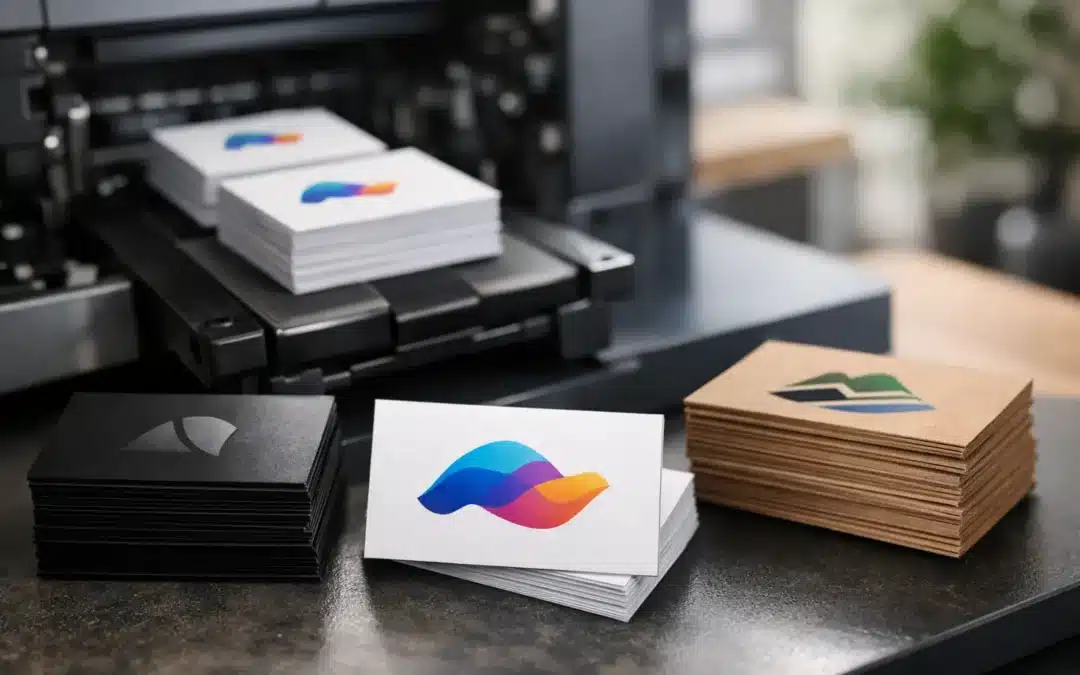
A business card is often handed over at the exact moment someone decides whether your business feels established, prepared and easy to deal with. That is why business cards printing Australia should be treated as more than a quick stationery order. The right card puts your name, contact details and brand identity into a prospect’s hand in a format they can keep.
For a tradesperson quoting on site, a local café meeting suppliers, a real estate agent at an open inspection or a club committee recruiting sponsors, a card still has a practical place. It does not rely on reception, battery life or an internet connection. It gives people a clear next step after a conversation.
What Makes a Business Card Work?
A good business card is not necessarily the most expensive one. It is the one that is clear, well made and consistent with the way your organisation presents itself elsewhere. Your logo should reproduce sharply, your contact details must be easy to find, and the stock should feel appropriate for your business.
This balance matters because cards are small. There is little room to recover from cluttered artwork, tiny type or a logo that has lost detail in print. A simple card with strong spacing and readable information will usually work harder than a design trying to fit every service, social channel and message onto both sides.
Start by deciding what the recipient needs to know. For most organisations, that means the person’s name, role, business name, mobile number, email address and website. A physical address is useful where customers visit your premises. A QR code can be worthwhile when it leads to a booking page, online portfolio or digital contact card, but it should support the printed information rather than replace it.
Keep the Design Easy to Read
The front of the card should make the business identifiable in seconds. The reverse can carry a service list, appointment details, a call to action or a short brand message. It depends on your audience. A financial adviser may need a restrained, confidence-building layout, while an event business can use the back to show a striking image or calendar prompt.
Avoid pale text on a light background, fine reversed-out type and overly detailed logos at a very small size. These can look acceptable on a screen but lose impact once printed. Ask for artwork guidance before production if you are unsure. A practical check at this stage can prevent an expensive reprint later.
Choosing Stock and Finish for Your Brand
Paper stock affects both durability and perception. A thin card can be suitable for a large, short-term promotion where quantity is the priority. For everyday networking and client meetings, a heavier stock generally gives a more professional result and survives life in a wallet, bag or vehicle better.
There is no single best option. The right choice depends on how the cards will be used, how many are required and what you want them to say about the business.
Uncoated stock has a natural, tactile feel and is often useful where people may need to write on the card. It suits appointment cards, service reminders and brands wanting a more understated presentation. Gloss stock offers brighter colour and image reproduction, making it a sensible option for bold logos, product photography and high-impact designs. Matt finishes are popular for a clean, contemporary appearance and can make text easier to read under bright light.
Special finishes can add distinction, but they should have a job to do. Spot UV, foil, embossing, rounded corners and textured materials can create a memorable result for premium brands, membership cards or executive use. They also add cost and may extend production time. If the card is mainly for broad distribution at an expo or community event, a well-designed standard finish may deliver better value.
Colour Matching Requires the Right Artwork
Your brand colours should look as consistent as possible across business cards, banners, uniforms, notebooks and promotional merchandise. This is especially important for organisations with a recognisable logo or established style guide.
Printed colour can vary from what you see on a monitor, which uses light rather than ink. Professional print files should be supplied at high resolution, with images large enough for the final card size. Vector logo files are preferred because they remain crisp when scaled. If you only have a small web image or an old JPEG, it may not reproduce cleanly.
Where colour accuracy is critical, discuss the intended result before the job is approved. A knowledgeable supplier can check file suitability, flag potential issues and advise on the most appropriate printing method. It is a straightforward step that protects the consistency your brand has worked to build.
Business Cards Printing Australia for Real-World Use
Australian organisations use business cards in different ways, and the order should reflect that. A national company attending a trade show may need several thousand cards for a campaign. A small accounting practice might prefer a smaller quantity with individual staff names, ordered as team members join or roles change. A sporting club could use cards for sponsors, committee contacts or membership enquiries.
Before confirming quantities, consider how quickly details are likely to change. If staff roles, phone numbers or locations are in flux, it is often wiser to order in stages rather than store cartons of outdated cards. On the other hand, ordering too few can increase the unit cost and leave your team short before an important event.
Think about the places cards will be handed out. People working in construction, transport, field sales or outdoor events need stock that withstands handling. Businesses operating from a showroom, clinic or office may place cards at reception, inside presentation folders or with customer orders. The context should guide the stock, finish and quantity.
For organisations managing multiple branded products, coordinating cards with other materials saves time and strengthens the overall presentation. The same logo files, colours and fonts can be carried through to flyers, pull-up banners, lanyards, pens, notebooks and event signage. This is where using one experienced supplier can make production easier to manage.
Prepare Your Order Before Production
A smooth print job begins with clear information. Provide the finished card size, quantity, single- or double-sided requirement, preferred stock and finish, plus the deadline and delivery location. If different names are required, send a carefully checked list of variable details in a consistent format.
It also helps to nominate one person to approve artwork. Multiple stakeholders can provide useful input, but last-minute changes from several directions often create confusion and delay. Check every phone number, email address, job title and web address before sign-off. These are small details, yet they are the reason the card exists.
When comparing prices, look beyond the initial figure. Confirm what is included in the quoted specification, whether artwork support is available, how proofs are handled, the expected turnaround and how delivery will be managed. A low price is not good value if the cards arrive late, the print is unclear or the stock does not match what was expected.
ABC2000 helps businesses, clubs, schools and event organisers manage branded print alongside their wider promotional product requirements. That practical support is particularly valuable when deadlines are fixed and several items need to look like they belong together.
A Final Check Before You Approve
Before production starts, view the proof as a recipient would. Can you identify the business immediately? Can you find a phone number without searching? Does the logo look sharp, and is there enough contrast between the text and background? If the answer is yes, the card is likely doing its job.
A business card may be small, but it is a physical reminder of the person and organisation behind it. Give it the same care you would give a customer meeting, and it can keep working long after the handshake.