A box of cheap giveaways left on a registration table is easy to forget. A well-chosen drink bottle used on the commute, a quality beanie worn at Saturday sport, or a notebook kept on a desk can keep a brand visible for months. That distinction sits at the centre of promotional merchandise trends 2026.
For Australian businesses, clubs, schools and event organisers, the focus is shifting from handing out more items to choosing merchandise people genuinely want to keep. Price still matters, particularly for large campaigns and volunteer-run organisations, but perceived value, product usefulness and reliable brand presentation matter more than ever.
Promotional Merchandise Trends 2026: Use Comes First
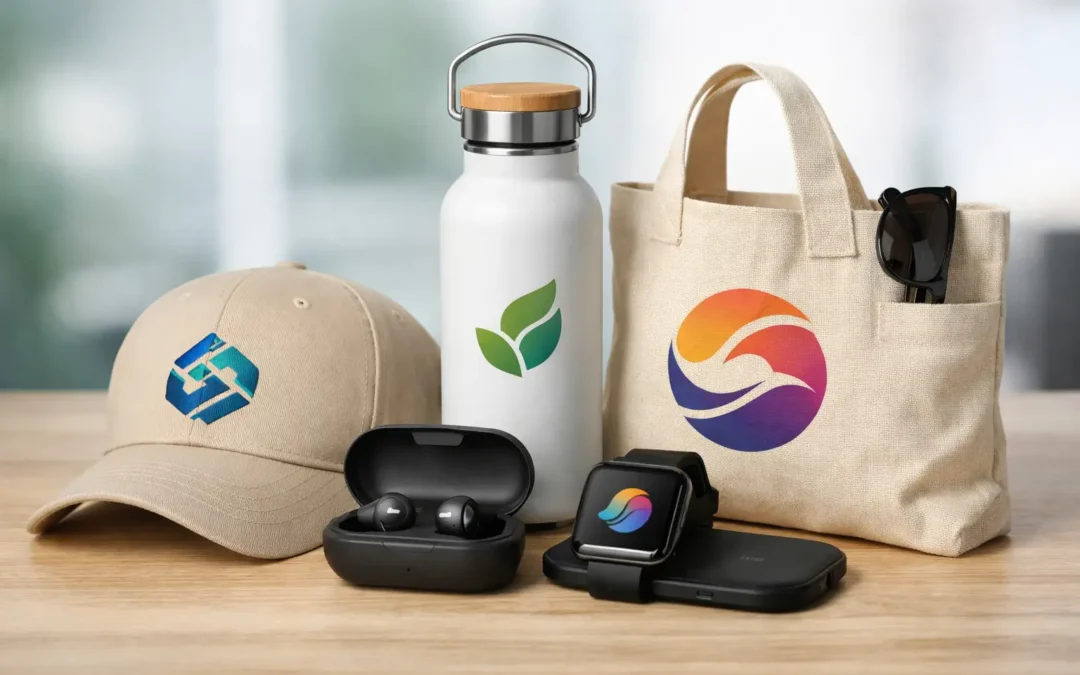
The strongest promotional products in 2026 will earn their place in everyday routines. Drinkware remains a dependable choice because it travels between home, work, the gym and events. Reusable coffee cups, insulated bottles, tumblers and stubby holders offer repeated brand exposure without needing a large logo or complicated message.
Useful desk items are also holding their ground. Promotional pens, notebooks, business card holders, keyrings and lanyards may not be new, but they work because they solve a simple problem. For offices, conferences and member organisations, these familiar products are easy to distribute and easy to use.
The trend is not about abandoning traditional merchandise. It is about selecting a better version of the product for the audience. A builder may get more value from a sturdy tape measure, branded workwear accessory or quality drink bottle than a novelty item. A school fundraiser may see better results with practical tote bags, badges or scarves that create a sense of belonging.
Before choosing a product, ask where it will be used, how often it will be seen and whether the recipient would choose to keep it if there were no logo on it. That is a more useful test than simply asking what is cheapest per unit.
Fewer Products, Better Quality
Buyers are becoming more selective about quality. A pen that skips, a bottle with a loose lid or a poorly printed logo can weaken the impression a business is trying to create. In contrast, an item with a solid feel, clean decoration and a practical purpose can make even a modest campaign look considered.
This does not mean every project needs premium merchandise. Large public events, community days and letterbox campaigns often need affordable products in higher quantities. The practical approach is to match product quality to the relationship being built. A low-cost pen can still be a smart option for broad reach, while staff recognition, client gifts or sponsor packs may justify a more substantial item.
In 2026, many organisations will divide merchandise into two tiers. High-volume items will support awareness and event attendance. Lower-volume, higher-value items will be used for staff, sponsors, major clients, volunteers or milestone recognition. This approach protects the budget while giving important audiences something that feels worth receiving.
Branding detail will matter more
As product choices become more deliberate, decoration quality becomes more visible. A logo should be clear, correctly positioned and suited to the material. Fine details that look good on a business card may not reproduce well on a small pen barrel or embroidered beanie.
Colour matching also deserves attention. Brand colours can vary across print methods, fabrics, plastics and metal finishes. Planning artwork early gives suppliers time to recommend suitable decoration methods and avoid surprises at proof stage. Simple, confident branding often performs better than trying to fit every message, phone number and social handle onto one small product.
Sustainability Needs a Practical Test
Environmental claims will continue to influence buying decisions, but Australian customers are looking past vague labels. Recycled materials, reusable products, paper-based packaging and longer-lasting items can all be worthwhile choices. The key question is whether the product is likely to be used rather than discarded.
A reusable bottle that remains in a cupboard is not automatically a better promotional choice than a well-made notebook that is used every day. Likewise, a recycled pen still needs to write well. Sustainability and usability should be assessed together, not treated as separate boxes to tick.
For many organisations, the most sensible option is to order fewer, more relevant products and distribute them with purpose. Give items to attendees who register, customers who meet a spending threshold, new members, staff completing training or volunteers supporting a major event. A considered distribution plan reduces waste and improves the value of each branded item.
There is also a growing preference for products with a clear story. A club may choose locally relevant apparel colours. An event may select reusable drinkware to support a refill station. A business may give new starters a practical welcome pack with a notebook, pen, lanyard and mug. When merchandise connects to the occasion, it feels less like an afterthought.
Apparel and Team Identity Stay Strong
Branded apparel remains one of the most visible forms of promotional merchandise, particularly for sporting clubs, schools, trade teams, hospitality venues and community groups. Beanies, scarves, caps, polos and jackets turn staff and supporters into a recognisable team.
The 2026 shift is towards wearability. People are more likely to wear apparel outside the workplace or event if the colour, fit and decoration feel considered. A small embroidered logo on a quality beanie may get more regular use than an oversized print that looks like an advertisement.
It depends on the purpose. High-visibility event shirts may need bold branding that can be recognised across a busy venue. Corporate uniforms often benefit from cleaner placement and a more restrained colour palette. For supporter merchandise, the club identity may be the design itself, making scarves, patches and badges especially effective.
Allow enough time for sizing, samples and approvals when apparel is involved. These projects often have more moving parts than standard promotional products, especially where multiple garment sizes, embroidery positions or individual names are required.
Event Merchandise Should Do a Job
Events remain a major driver of promotional product demand, but the most successful event merchandise will be functional. Lanyards help with identification. Badges recognise delegates and volunteers. Branded drinkware helps reduce single-use cups. Balloons, banners and display products create visual presence before guests have even collected a giveaway.
The best event product mix usually includes one item for visibility and one item for usefulness. For example, an expo stand may use a banner and branded table display to attract attention, then offer pens, notebooks or drink bottles that continue working after the event. A school carnival may combine branded balloons for atmosphere with reusable products that support fundraising.
Timing is critical. Artwork approval, production lead times and freight all need to be accounted for before the event date gets close. Ordering early also gives more choice across colours, stock availability and decoration options. Last-minute merchandise can still be possible, but it often limits the products and finishes available.
Small Runs and Specialist Items Have a Place
Not every promotional campaign needs thousands of units. Clubs, associations and businesses are increasingly using smaller runs for recognition, anniversaries, member gifts and limited-edition merchandise. Lapel pins, commemorative teaspoons, aluminium coasters, custom patches and premium badges can create a lasting connection when the occasion calls for something distinctive.
These products are particularly effective when there is a story behind them. A 50-year club anniversary, a major sponsorship milestone, a long-service award or a commemorative event deserves more than a generic giveaway. Specialist items can become keepsakes, but only when the design and production quality match the significance of the moment.
Small-run products may carry a higher unit cost, so they are best used where the recipient list is specific. They are less suited to broad street distribution, but highly effective for members, award recipients, board guests and valued supporters.
Plan Earlier, Coordinate Better
One of the less glamorous promotional merchandise trends for 2026 is better planning. Buyers want certainty around stock, artwork, delivery dates and product quality. That requires clear information at the start: quantity, deadline, budget range, logo files, delivery location and the intended audience.
Working with one supplier across promotional products, printing and display materials can also reduce administrative pressure. Instead of coordinating separate orders for banners, business cards, badges, lanyards and giveaways, organisations can keep colours, artwork and timing aligned through one project process.
For Melbourne and Victorian organisations managing events, campaigns or seasonal merchandise, this hands-on coordination can be as valuable as the product itself. ABC2000 helps customers match the item to the occasion, manage branding detail and keep production moving to schedule.
The most effective merchandise in 2026 will not be the loudest or the cheapest. It will be the item that suits the recipient, represents the brand properly and arrives when it is needed. Start with the purpose, choose products people will use, and give the artwork and production process enough time to do the brand justice.