A late delivery, a blurred logo or drink bottles that feel too light in the hand can undo a great deal of planning. The right promotional products supplier helps prevent those problems before production starts, while making it easier to choose merchandise that people will genuinely use and remember.
For Australian businesses, clubs, schools and event organisers, branded products are more than giveaways. They put your name into offices, cars, sports bags, lunchrooms and community events. The supplier you choose has a direct effect on how professional that brand presence looks.
Choosing a promotional products supplier
Price will always matter, particularly when ordering for a large event or working within a committee-approved budget. But the cheapest quote is not automatically the best value. A low unit cost can become expensive if the product is poor quality, the branding is incorrectly positioned, stock is unavailable or the order misses its required date.
A capable supplier should ask useful questions early: Who is receiving the item? How will it be used? What quantity is required? When must it arrive? These details shape the best recommendation. A premium metal pen may suit a client gift or staff recognition program, while a reliable plastic pen, lanyard or tote bag may be the better choice for a high-volume community event.
The strongest suppliers treat your enquiry as a project, not just a transaction. They consider product suitability, print method, artwork, proofing, production timing and delivery together. That is especially valuable when you need several items for one campaign, such as branded notebooks, mugs, banners, name badges and giveaways for a conference or open day.
Start with the purpose, not the catalogue
A broad catalogue is useful, but it can make a decision harder if you begin by scrolling through thousands of products. Start with the result you need instead.
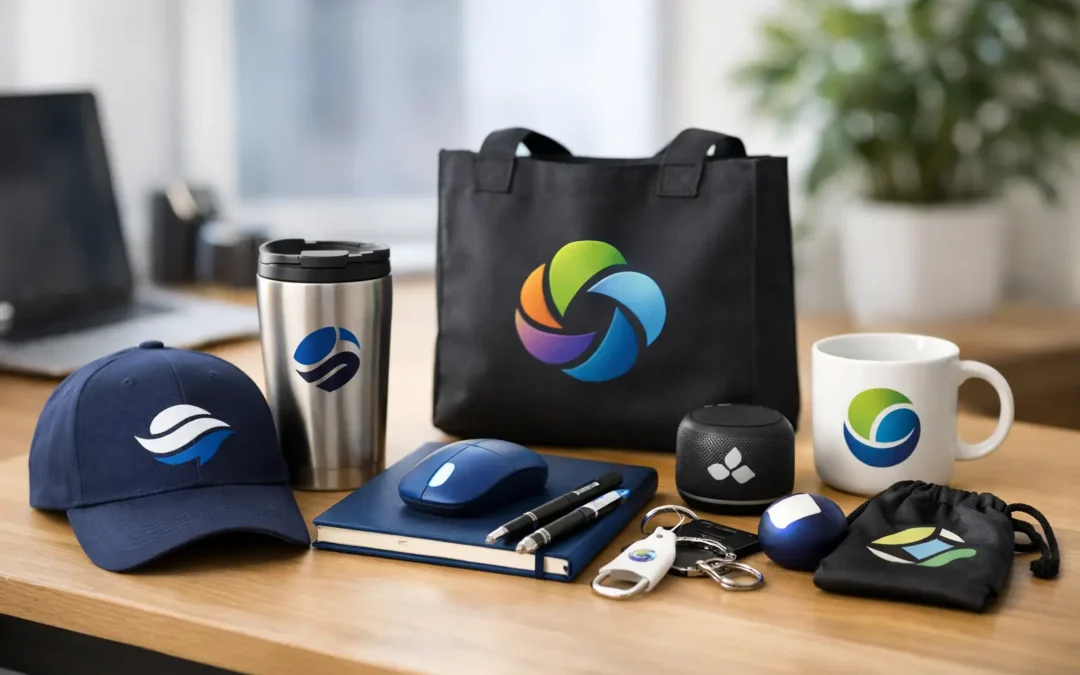
For customer retention, select something practical that will stay on a desk, in a kitchen or in a vehicle. Branded drinkware, quality pens, keyrings and notebooks can offer regular visibility because they are used repeatedly. For team identity, look at embroidered beanies, scarves, uniforms, badges and patches. For events, consider products that work at the venue, such as lanyards, balloons, banners, stubby holders or reusable cups.
The item should suit the audience and the setting. A stylish aluminium coaster may be an excellent corporate gift, but it is unlikely to be the right fit for a junior sports club fundraiser. Equally, a basic giveaway can be perfect for a busy trade stand where quantity and speed of distribution matter most.
What a promotional products supplier should manage
Custom merchandise has several moving parts. A supplier with real production experience should make those parts easier to manage, not leave you to coordinate them yourself.
Artwork and brand reproduction
Your logo must be supplied in a format that suits the decoration method. Vector artwork is generally preferred for clean, scalable printing, embroidery and engraving, while low-resolution images can produce soft edges or pixelation. A good supplier will check artwork before production and explain if it needs adjustment.
Colour matching also deserves attention. Screen printing, digital printing, embroidery, laser engraving and pad printing each create a different result. A dark logo on a pale mug may be straightforward, while fine detail on a textured fabric or a small curved surface can require a simplified approach. Ask to see a proof and check spelling, colours, position and contact details carefully before approval.
Brand consistency matters most when you are ordering across several products. Your pens, business cards, event banners and staff lanyards should look like they belong to the same organisation. ABC2000 can assist with product selection and artwork coordination so the finished range presents as one clear, professional image.
Product quality and decoration method
A product photo does not always reveal the weight of a mug, the finish of a pen or the strength of a tote bag handle. Ask about materials, construction and intended use. If an item will be carried outdoors, washed regularly or handled by hundreds of people, durability should be part of the decision.
There are sensible trade-offs. Plastic drink bottles are often economical for large-scale promotions, while insulated stainless steel drinkware generally creates a more premium impression and can have a longer useful life. Embroidery offers a durable finish on apparel and beanies, but may not suit very fine lettering. Digital print can reproduce detailed artwork, but the product surface and print area still affect the outcome.
Choose quality that matches the role of the item. Not every campaign needs the most expensive option, but every product should be fit for purpose and represent your organisation well.
Timing, stock and delivery control
Promotional products are often tied to fixed dates: a product launch, annual general meeting, school carnival, trade show, awards night or club presentation. That makes lead time just as important as product choice.
Before placing an order, confirm stock availability, artwork approval deadlines, production time and delivery expectations. Imported or specialist items may offer more choice, but they can require longer planning. Locally available stock may be better when timing is tight, though the colour or style range may be narrower.
Allow extra time where possible. Artwork revisions, freight delays and changes to quantities can all affect a schedule. A supplier that communicates clearly throughout production gives you time to make decisions before a small issue becomes a missed deadline.
Questions worth asking before you order
A short conversation at the start can save considerable time later. When comparing suppliers, ask whether they can provide clear artwork proofs, explain the available branding methods, confirm stock before production and give a realistic delivery date. You should also ask what happens if an item is unavailable or your artwork needs alteration.
For larger orders, it can be worthwhile requesting a physical sample or discussing the product specifications in detail. This is particularly helpful for apparel sizing, drinkware, banners and premium presentation items. A sample adds time and sometimes cost, but it can be worthwhile when the merchandise will be used for a major campaign or presented to valued clients.
It is also sensible to confirm whether delivery is required to one location or several. Sending packs to staff, branches, sponsors or event volunteers can involve different quantities and addresses. Raising this early helps the supplier plan packing and freight accurately.
Build a range that works together
One well-chosen product can make an impact, but coordinated merchandise often works harder. A new business may need business cards, branded pens, notebooks and a pull-up banner. A sporting club may need supporter scarves, beanies, lapel pins, presentation items and event signage. An association may combine name badges, lanyards, bags and commemorative teaspoons for an anniversary event.
Working with one supplier for a broader range can simplify artwork control, ordering and communication. It also gives the supplier a clearer understanding of your brand standards and the purpose behind each item. That does not mean every product must be identical. Different audiences and budgets may call for different items, but the logo treatment, colours and overall quality should remain consistent.
Look for service that continues after the quote
A detailed quote is useful, but the real test of a supplier is what happens after you approve it. You should know who is managing the order, when you will receive a proof, what the next production stage is and when the goods are expected to arrive.
This level of coordination matters for volunteer-run clubs and busy office teams just as much as it does for marketing departments. Most buyers do not have time to chase multiple vendors, interpret decoration specifications or follow up every production step. They need clear advice, dependable communication and products that arrive ready to use.
The best promotional merchandise is not necessarily the loudest or the most expensive. It is the item that suits its recipient, carries your branding clearly and arrives when your organisation needs it. Choose a supplier that takes those practical details seriously, and your branded products can keep representing your name long after the event pack-up.