
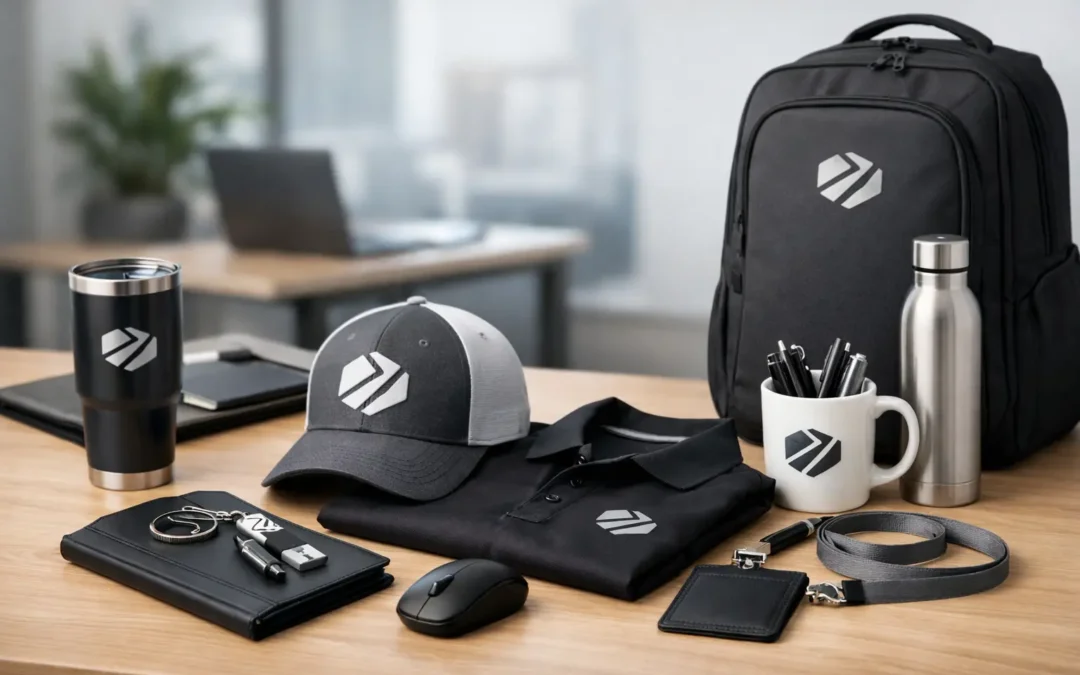
Order branded merchandise too late, choose the wrong product, or send artwork that is not production-ready, and a simple campaign can turn into a rush job. A good corporate merchandise ordering guide helps avoid that. For businesses, schools, clubs and event organisers, the real goal is not just buying items with a logo on them. It is getting the right product, branded properly, delivered on time, and suited to the audience who will actually use it.
What a corporate merchandise ordering guide should help you decide
Most buyers are not short on product options. They are short on clarity. Pens, mugs, drink bottles, lanyards, notebooks, badges, keyrings, scarves, beanies, banners and specialist items all have their place, but not every product suits every brief.
The first question is always purpose. If you are ordering for a conference, you may want items that are easy to hand out and easy to carry. If you are ordering for internal staff recognition, presentation and perceived value matter more. If you are supplying a school, club or association, durability and repeat ordering often matter just as much as appearance.
That is why experienced buyers start with outcomes rather than products. Do you want visibility, day-to-day use, team identity, fundraising appeal, event signage, or a more polished client gift? Once that is clear, the product list becomes much easier to narrow down.
Start with the use case, not the catalogue
A common mistake is picking a product because it looks good in isolation. A drink bottle may be popular, but if your budget is tight and you need broad distribution at a public event, a lower-cost item such as a pen, stubby holder or keyring may deliver better reach. On the other hand, if you are trying to create a premium impression for a smaller group, cheaper items can work against you.
Think about who will receive the merchandise and how they will use it. Office teams may get regular use from notebooks, mugs, lanyards and desk accessories. Outdoor events may suit caps, beanies, balloons, banners and drinkware. Clubs and community groups often need practical products that support identity and repeat visibility, such as badges, patches, scarves and branded apparel accessories.
There is also a timing issue. Seasonal products need planning. Beanies and scarves ordered after the cold weather starts may miss the best window. Event merchandise ordered too close to a launch date limits your options, especially if custom production, freight and artwork approval are involved.
Match the product to the audience
The best merchandise feels relevant. A polished aluminium coaster or lapel pin may suit recognition, commemorative use or corporate presentation. A lanyard or badge is more functional and may be ideal for staff, visitors or event access. Business cards and printed materials are still important where direct contact and professional presentation matter.
This is where a broader supplier can save time. If you are comparing one narrow product category at a time, it is harder to weigh trade-offs across budget, branding area, production method and lead time. Looking at the whole requirement in one place usually leads to better decisions.
Budgeting for merchandise without cutting the wrong corners
Price matters, but cheapest is rarely best value. Low-grade products can disappoint the recipient and reflect poorly on the organisation. At the same time, over-specifying every item can waste budget that would be better spread across quantity, packaging or event support materials.
The practical approach is to separate must-haves from nice-to-haves. Your must-haves are product suitability, branding clarity, and delivery timing. Once those are covered, you can weigh upgrades such as better materials, larger branding areas, extra print colours or more refined presentation.
Quantities also affect pricing in a big way. Ordering too few units can make the per-item cost higher than expected, while ordering far too many ties up cash and leaves surplus stock sitting in storage. If the product is evergreen, such as pens, mugs or notebooks, carrying extra stock may make sense. If it is event-specific or date-sensitive, tighter forecasting is safer.
Australian buyers should also factor in freight timing, approval time and any setup costs linked to branding. The unit price is only part of the total job cost.
Artwork, branding and why good logos can still print badly
One of the biggest gaps between expectation and result comes from artwork. A logo that looks sharp on a screen does not always reproduce well on fabric, metal, plastic or small print areas. Fine lines can fill in, gradients may not translate cleanly, and colours can shift depending on the material and print process.
That does not mean you need to be a designer to place an order. It does mean you need to allow for artwork review and, where necessary, adjustment. A dependable supplier will flag issues early, explain the limits of the branding method, and suggest options that preserve the look of your brand as closely as possible.
Corporate merchandise ordering guide to branding methods
Print method matters because it changes both appearance and durability. Pad printing may suit some hard goods, embroidery works well for certain fabric items, while digital or screen printing may be better for larger graphic areas. Laser engraving can create a premium finish on selected products, but it will not suit every brand style.
There is always a trade-off. A method that gives the sharpest detail may cost more. A method that is more economical may have size or colour limitations. This is where clear advice is worth far more than guessing from a product image.
For brand consistency, supply the best logo files you have and confirm preferred colours, fonts and any usage rules. If your organisation has multiple departments or sub-brands, sort that out before production starts. Late changes to artwork often create delays and extra cost.
Lead times are not just production times
When buyers think about timing, they often look only at the manufacturing window. In practice, the full schedule includes product selection, quoting, artwork preparation, proof approval, production, packing and delivery. If the item is custom sourced or highly specialised, the timeline may be longer again.
That is why urgent orders can be tricky. Sometimes they are possible, but the product range may narrow and the branding options may be more limited. If your event date is fixed, work backwards from it. Build in time for approvals and any internal sign-off. Marketing managers, procurement teams and committee-led groups often lose time simply waiting for stakeholder decisions.
If the order is tied to an event, ask the practical question early: when does the merchandise need to be in hand, not just dispatched? A delivery date too close to the event leaves no room for delays, receiving issues or repacking.
Ordering for schools, clubs and community groups
These buyers often have a slightly different brief from corporate teams. Budgets can be tighter, committees may change, and the order may need to satisfy several audiences at once – members, volunteers, students, sponsors and attendees.
In these cases, consistency and repeatability are especially important. If you will reorder the same badges, scarves, patches or promotional items later, document the product specification and branding details properly from the start. That makes future orders easier and helps keep the look consistent across different production runs.
It also helps to choose products with broad appeal rather than novelty for novelty’s sake. Merchandise works hardest when people keep using it. A practical item with clean branding will often outperform a more complicated product that gets one day of attention and then ends up in a drawer.
Choosing a supplier is part of the ordering process
A corporate merchandise ordering guide is not complete without supplier selection. Product range matters, but support matters just as much. Buyers need clear communication, honest advice on what will and will not work, dependable scheduling and a quality standard that matches the organisation’s brand.
This is especially true when you need more than one item or a mix of merchandise, print and display products. Coordinating multiple suppliers can create gaps in timing, branding and accountability. Working with an experienced provider that can manage sourcing, artwork support and production across a broader range usually reduces that risk. That service-led approach is one reason organisations across Victoria work with ABC2000 on everything from everyday promotional products to more specialised branded items.
The best orders are rarely the flashiest. They are the ones that arrive on time, look right, suit the audience and support the purpose they were bought for. If you start with the outcome, ask the practical questions early and leave enough room for proper production, your merchandise will do its job long after the order is placed.