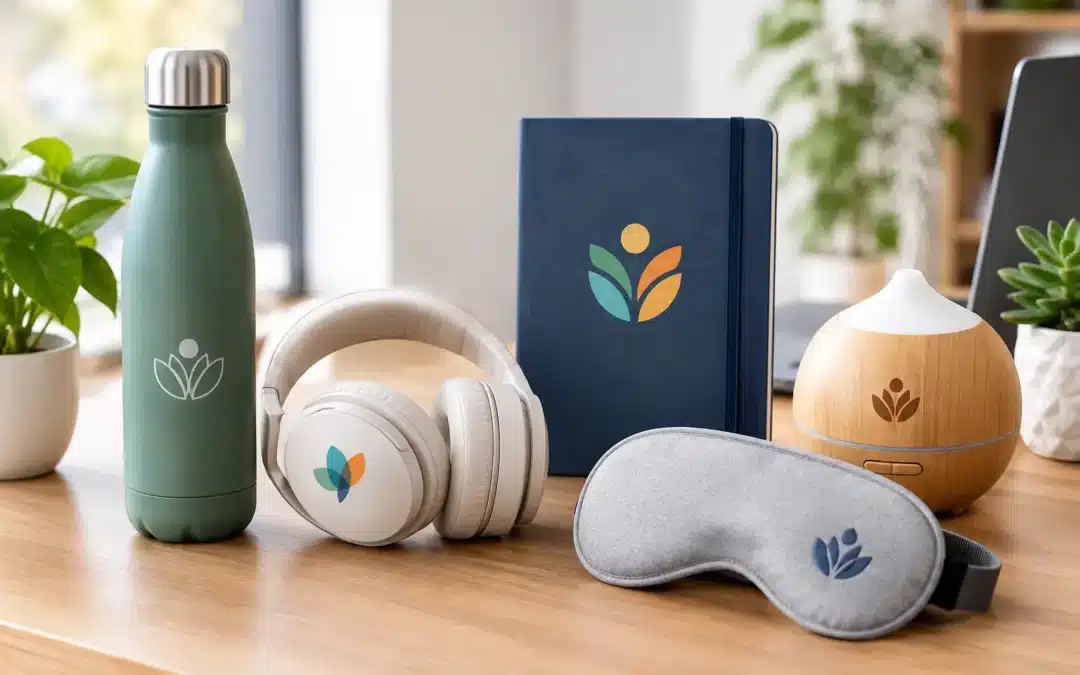
A branded stress ball handed out once a year is unlikely to change how people feel about work. The staff wellbeing merchandise trends gaining ground are more practical: items employees choose to use, share and keep close during an ordinary working week. For Australian organisations, the strongest programs pair useful branded products with genuine wellbeing activity, rather than treating merchandise as the activity itself.
That distinction matters. A quality drink bottle can support a hydration challenge. A notebook can give a team a quiet place for planning and reflection. A beanie can make outdoor staff feel considered through winter. The product has a job to do, while the branding keeps the organisation’s care and identity visible.
Why wellbeing merchandise is becoming more considered
Staff expectations have changed. Teams want recognition that feels personal without being intrusive, and practical without looking like a leftover event giveaway. Hybrid work has also widened the definition of a workplace. A wellbeing item may now be used at a desk in the office, at home, on site, in a vehicle or during a community event.
For employers, this creates an opportunity to make employee initiatives more tangible. Branded merchandise gives a wellbeing campaign a physical presence and helps create consistency across departments, locations and shift patterns. It can also be a sensible way to welcome new starters, recognise service milestones or support a busy period.
The key is relevance. A product that suits the work, the season and the people receiving it will carry more value than a high-volume novelty item with a large logo.
Staff wellbeing merchandise trends shaping better choices
Everyday hydration remains a reliable choice
Reusable drinkware continues to be one of the most useful categories for staff wellbeing. Insulated bottles, travel mugs and tumblers suit office teams, field staff, teachers, tradespeople and club volunteers alike. They support a straightforward health message while reducing reliance on disposable cups and bottles.
The trend is moving towards better-quality drinkware in a size and style people will actually carry. Consider whether staff have access to refill stations, spend time driving between jobs or work outdoors. A slim bottle might suit a handbag or workstation, while a larger insulated model can be more appropriate for site crews or sports clubs.
Branding should be clear but not overbearing. A well-placed logo and a simple colour match often look more premium than covering every available surface.
Desk comfort is practical, not flashy
Small products that make a desk feel more organised and comfortable are becoming popular in wellbeing packs. Quality notebooks, pens, mouse mats, cable organisers and reusable coffee cups all have a role, particularly for hybrid teams and new employee onboarding.
A notebook may seem traditional, but it remains useful in meetings, training sessions and one-on-ones. Choose a format that matches how your team works. Hard-cover notebooks can feel substantial for leadership events or milestone recognition, while lighter options may work better for a large staff rollout.
This category works best when it is not framed as a cure for workload pressure. It is a practical gesture that supports daily work, not a substitute for good management, reasonable resourcing or access to support.
Seasonal comfort has a stronger role
In Melbourne and across Victoria, the weather makes seasonal merchandise a particularly sensible option. Beanies, scarves, umbrellas and warm outerwear can be appreciated by teams commuting early, working outdoors or attending winter events. In warmer months, caps, cooling towels and quality drinkware can support sun-smart messages.
Seasonal products also give organisations a natural reason to refresh staff recognition throughout the year. A winter pack for a warehouse team and a summer event kit for volunteers do not need to be identical. Matching the product to the setting shows more thought than issuing the same item to every group regardless of their day-to-day conditions.
Inclusion is influencing product selection
Wellbeing merchandise should be easy for the broadest possible range of staff to use and enjoy. That means avoiding assumptions about gender, family circumstances, fitness interests or personal health goals. A universal product such as a drink bottle, notebook, lunch container or umbrella is often a safer and more inclusive choice than merchandise tied to a particular lifestyle.
Accessibility also deserves attention. Easy-open drinkware, readable print, comfortable lanyards and uncomplicated product designs can make a real difference. If apparel is part of the program, offer a considered size range and allow people to select their preferred fit where possible.
A simple employee survey can help here. Ask what people would find useful, then compare the responses with budget, lead time and branding requirements before placing an order.
Recognition packs are replacing one-off giveaways
More organisations are using merchandise as part of a planned recognition moment rather than distributing products without context. Welcome packs, service anniversary gifts, conference kits and thank-you bundles make branded items feel purposeful.
A recognition pack does not need to be expensive to work well. A branded notebook, quality pen and reusable cup can make a polished set for a new starter. For a major milestone, a more distinctive item such as a lapel pin, commemorative teaspoon or aluminium coaster can provide a keepsake that feels less disposable.
The right balance depends on the occasion. Everyday staff appreciation calls for useful products in sensible quantities. Significant anniversaries and awards can justify a more specialised item with a higher perceived value.
Build a wellbeing pack around the purpose
Before choosing products, decide what the merchandise needs to achieve. Is it supporting an internal wellbeing week, helping unite a dispersed team, welcoming new employees or recognising volunteers after a major event? The answer should guide the product mix, branding treatment and budget.
For a wellbeing campaign, fewer better items are usually more effective than a crowded bag of low-value products. A drink bottle, notebook and pen can be enough when paired with a clear internal message and useful activity. For an outdoor team, a cap or beanie may be the more relevant addition. There is no single pack that suits every workplace.
It is also worth considering distribution. If staff are spread across several locations, choose items that are easy to pack, transport and store. Bulky products, fragile drinkware and complex size assortments can create unnecessary work for office administrators. Good production planning should account for quantities, individual names if required, delivery deadlines and spare stock for late starters.
Branding that staff will want to carry
Wellbeing merchandise is still branded merchandise, but staff are more likely to use products with restrained, well-executed decoration. Keep the artwork legible, use approved logo colours and select a decoration method suited to the material. A poor-quality print, incorrect colour match or logo placed in an awkward position can undermine an otherwise thoughtful program.
Consider whether the item needs a full corporate logo, a smaller mark or a campaign message. For internal wellbeing packs, a short phrase linked to the initiative may work alongside the logo. Avoid messages that feel forced or overly cheerful when staff are dealing with genuine work pressures. Plain, supportive language generally lands better.
Working with one experienced supplier can simplify this process. ABC2000 can help organisations coordinate product options, artwork and production details across a broader merchandise range, helping reduce the risk of mismatched branding or missed deadlines.
Measure usefulness, not just distribution
The easiest figure to report is how many items were handed out. It is not always the most useful one. Where practical, ask whether staff used the products, what they valued and what they would choose differently next time. Informal feedback after an event can be enough for a small business or club, while larger organisations may add a short question to an internal staff survey.
Look for signs of continued use. Are branded bottles appearing in meeting rooms? Do new starters use their notebooks during induction? Are volunteers wearing the supplied beanies at winter fixtures? Repeated use is a stronger indicator of value than the initial handout.
A well-chosen product will not solve every wellbeing challenge, and it should never be presented as proof that an organisation has done enough. Used alongside fair policies, good communication and meaningful recognition, however, it can give staff a useful reminder that they are seen. Start with what will make their working day a little better, then make the brand part of that experience.