A plain white mug and a branded mug can look similar on a screen, yet the price gap can be wider than many buyers expect. If you have ever asked why are branded products more expensive, the short answer is that you are not only paying for the item itself. You are paying for branding accuracy, production setup, quality control, coordination, and the confidence that the finished product will represent your business properly.
That matters more than most people realise until they are working to an event date, a campaign launch, or a school, club, or staff order that cannot go wrong. In branded merchandise, the cheapest unit price is rarely the full story.
Why are branded products more expensive than unbranded stock?
Unbranded stock is simple. A supplier buys a standard product in volume, stores it, and sends it out as-is. Once branding is involved, the process changes. Artwork needs to be prepared, print methods need to be selected, production files need to be checked, colours need to be matched as closely as possible, and the product needs to be decorated in a way that suits the material.
That extra work happens before the first printed pen, stitched cap, engraved coaster or branded stubby holder is even produced. The cost is not only in ink, thread or transfer. It is in the setup, the labour, the machinery, and the experience required to get a reliable result.
For organisations buying merchandise to promote a business, outfit a team or support an event, presentation matters. A blurry logo, poor print placement or mismatched colours can make a product look rushed and cheap. That is exactly what most buyers are trying to avoid.
The real cost sits in customisation
Customisation changes a mass-produced item into something specific to your organisation. That sounds straightforward, but in production terms it adds several layers.
First, there is artwork preparation. Logos often need to be resized, cleaned up, converted into the correct format, and checked for print suitability. A design that looks fine in a Word document may not be ready for embroidery on beanies or screen printing on drink bottles. If your logo includes fine detail, gradients or multiple colours, the production method has to match the artwork.
Second, there is setup. Screen printing, embroidery, pad printing, digital transfer, laser engraving and debossing all have setup requirements. Machines need to be configured. Screens or files need to be prepared. Samples or proofs may need approval. These costs are spread across the order quantity, which is why small runs often look more expensive per unit.
Third, there is handling. Unbranded stock can move through a warehouse quickly. Branded stock needs more touchpoints. Products are counted, branded, checked, packed and often sorted by variation. If you have multiple departments, names, sizes or designs, that complexity adds time and cost.
Quality materials usually cost more upfront
Not all promotional products are built the same. Two notebooks may look similar in a photo, but one may have thinner paper, a weaker cover and poor binding. Two mugs may both be white ceramic, but the cheaper one may chip more easily or produce a less consistent print finish.
This is one reason branded products can cost more than expected. Businesses and organisations generally want items that hold up in real use. A promotional pen that stops working after a day does not create a good impression. A lanyard with weak clips or a banner with poor colour reproduction can reflect badly on the brand attached to it.
The better the base product, the better the final result tends to be. That does not mean every order needs the premium option. It does mean that if durability, presentation and repeat use matter, paying a little more can make commercial sense.
Branding methods affect price more than buyers think
The item itself is only part of the quote. The branding method often has a big impact on cost.
Embroidery, for example, gives a durable and professional finish on apparel, caps and bags, but stitch count and logo complexity can push pricing upward. Screen printing can be cost-effective for larger runs, yet the number of colours affects setup and production. Laser engraving creates a sharp finish on metal products and premium items, but it suits some materials better than others. Digital print can reproduce more detail, though it may not always be the best option for every product surface.
A good supplier is not charging more simply for the sake of it. They are matching the branding method to the item so the result works in practice. A cheap print method on the wrong surface can crack, fade or peel. Saving money upfront is not much of a saving if the product ends up in the rubbish.
Why are branded products more expensive in small quantities?
This is one of the most common pricing frustrations, especially for small businesses, clubs and short-term events. The reason is simple enough: many production costs do not disappear just because the order is small.
If a screen needs to be created, artwork needs to be checked, or an embroidery file needs to be digitised, that setup still happens whether you order 25 units or 2,500. Larger orders spread those fixed costs across more items, bringing the unit price down.
That is why bulk buying often offers better value on promotional merchandise. It is not just a sales line. It reflects how production works. If you know you will need branded mugs for staff onboarding all year, or lanyards for recurring events, ordering ahead can be more economical than placing several small jobs.
Of course, bulk is not always the right answer. If details may change, storage is limited, or the campaign is highly specific, a smaller order may still be the smarter option. The point is that lower quantity nearly always means a higher unit cost.
Service, support and reliability are part of the price
There is a difference between buying a product and managing a branded merchandise project. For many organisations, especially those juggling deadlines, approvals and internal stakeholders, that difference matters.
A reliable supplier is doing more than processing an order. They are helping confirm quantities, checking branding suitability, advising on product options, managing production timelines and communicating clearly if anything needs adjustment. That support is part of the value.
It can be tempting to compare quotes on unit price alone, but that does not account for what happens when artwork is supplied in the wrong format, when the chosen product does not suit the logo, or when delivery timing becomes critical. Experienced guidance helps prevent expensive mistakes.
For Australian buyers, especially schools, clubs, councils, event teams and growing businesses, dependable service often saves more than it costs. Missed deadlines, poor print quality and inconsistent branding have a real commercial impact.
Freight, timing and local expectations also shape cost
In Australia, lead times and freight can influence pricing more than buyers expect. Some products are stocked locally, while others are sourced offshore or brought in through larger supply chains. If timing is tight, express production or freight may be required, and that can lift the total cost quickly.
Then there is scheduling. Custom jobs move through production queues. If an order needs to jump the line because an event date is fixed, the price may reflect that urgency. Rush work is possible in many cases, but it is rarely the cheapest path.
There is also the matter of consistency. Organisations often want repeat orders to match previous jobs as closely as possible. Keeping branding, colours and specifications aligned over time requires attention and production discipline. That consistency is valuable, especially for customer-facing businesses and membership organisations.
Expensive does not always mean overpriced
Sometimes branded products cost more because they genuinely involve better materials, better production and better support. Other times, a higher price reflects branding attached to the product category itself. That is where buyers need a practical view.
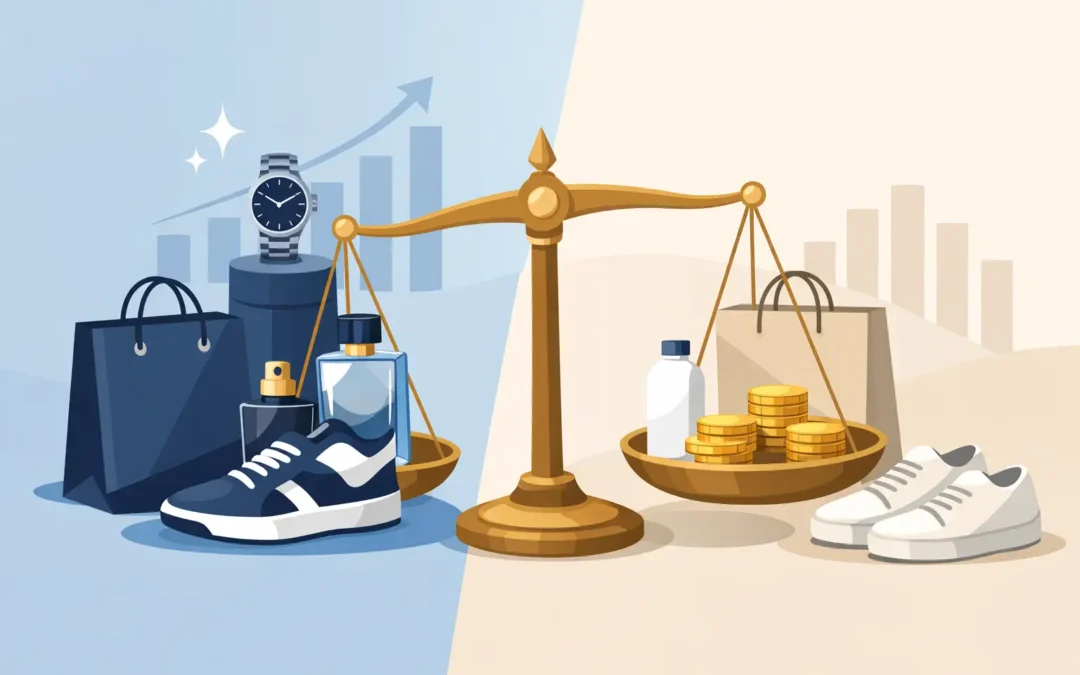
The right question is not only why are branded products more expensive. It is whether the product is worth the spend for the intended use. A giveaway item for a large expo may not need the same finish as a commemorative piece, executive gift or long-term staff uniform item. A budget pen can be perfectly suitable for one campaign, while a premium notebook or drink bottle may make more sense for client gifting.
The best buying decisions usually come from balancing three things – purpose, quantity and expected quality. If the item needs to last, reinforce credibility or represent your organisation in a polished way, spending more can be justified. If the goal is broad reach at low cost, a simpler specification may be the better fit.
That is why experienced advice matters. A capable supplier will not push every buyer into the highest-priced option. They will help match the product to the job.
When branded merchandise is done well, it works harder than a plain item ever could. It carries your name, your colours and your reputation into the real world. That is worth treating as an investment, not just a line item.